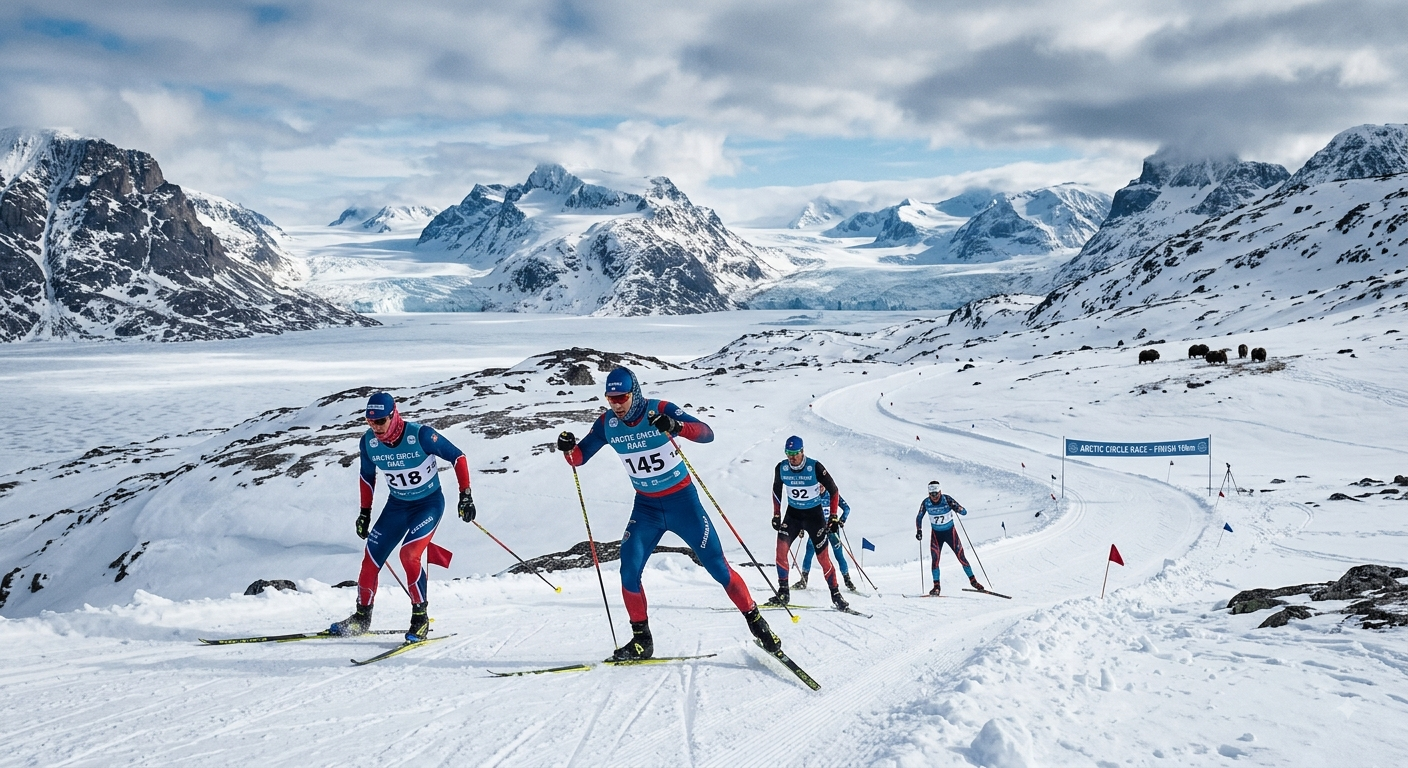
Introduction to the Arctic Circle
The Arctic Circle is one of the most distinctive geographical boundaries on Earth. Located at approximately 66.5° north latitude, it marks the southernmost point in the Northern Hemisphere where the sun can remain above the horizon for a full 24 hours during summer and below it for a full 24 hours during winter.
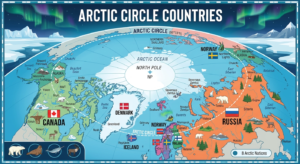
Stretching across parts of several countries, including Norway, Sweden, Finland, Russia, Canada, Greenland, Iceland, and the United States, the Arctic Circle encompasses a vast and diverse Arctic region. It is not simply a line on a map. Beyond it lies a polar environment shaped by frozen seas, tundra, glaciers, snow, seasonal darkness, and extraordinary wildlife.
The Arctic Circle is also important far beyond its geographical boundaries. The region plays a major role in Earth’s climate system, supports unique ecosystems, provides homes and livelihoods for Indigenous communities, and offers some of the planet’s most remarkable natural experiences.
Geography and Climate of the Arctic Circle
A Landscape Shaped by Ice and Tundra
The landscape around the Arctic Circle varies considerably. Some areas are covered by mountains and glaciers, while others consist of broad tundra plains, rocky coastlines, wetlands, and forests near the southern edge of the Arctic.
One of the defining features of the region is sea ice. Unlike land-based glaciers, sea ice forms when ocean water freezes. It expands dramatically during the cold season and retreats during summer, creating an important habitat for marine life.
The Arctic tundra is another characteristic environment. Trees are scarce in much of the tundra because of short growing seasons, low temperatures, and permanently or seasonally frozen ground. Instead, mosses, lichens, grasses, and small shrubs dominate the landscape.
Extreme Seasonal Conditions
The Arctic climate is strongly seasonal. Winters can bring long periods of darkness and severe cold, while summers may provide almost continuous daylight.
The farther north one travels, the more dramatic these seasonal differences become. Near the Arctic Circle itself, the phenomenon of the midnight sun lasts for a shorter period than it does farther north. At locations well above the circle, however, continuous daylight can continue for weeks or even months.
Winter brings the opposite experience: the polar night. During this period, the sun does not rise above the horizon for an extended time. Although the sky is not necessarily completely dark throughout the day, the landscape can remain under twilight-like conditions for long periods.
Arctic Wildlife and Ecology
The Arctic ecosystem may appear harsh and empty at first glance, but it supports a remarkable range of life.
Polar Bears and Arctic Foxes
The polar bear is among the Arctic’s best-known animals. It depends heavily on sea ice for hunting seals and moving across its environment. Changes in sea-ice conditions can therefore affect its ability to find food and reproduce successfully.
The Arctic fox is much smaller but exceptionally well adapted to the environment. Its thick fur provides insulation, and its coat changes with the seasons, helping it blend into snowy and tundra landscapes.
Reindeer, Seals, and Whales
Reindeer, known as caribou in North America, are closely associated with Arctic and sub-Arctic landscapes. Their wide hooves help them travel over snow and soft ground, while their seasonal movements allow them to follow changing food resources.
The surrounding seas support numerous marine species. Seals provide a crucial food source for predators such as polar bears, while whales including bowhead, beluga, narwhal, and several migratory species move through Arctic waters.
Migratory birds also arrive in enormous numbers during the warmer months. They take advantage of abundant insects, plants, and marine food before returning south as winter approaches.
How Arctic Species Survive
Survival in the Arctic requires specialized adaptations. Animals may develop thick layers of fat, dense fur, seasonal camouflage, compact body shapes, or behavioral strategies that conserve energy.
Many species also follow seasonal migration patterns. These adaptations demonstrate how closely Arctic wildlife is connected to changes in temperature, snow cover, sea ice, food availability, and daylight.
People and Life in the Arctic
The Arctic is not an uninhabited wilderness. It has been home to Indigenous peoples for thousands of years, with communities developing detailed knowledge of local landscapes, weather, animals, plants, and seasonal cycles.
Traditional livelihoods in different parts of the Arctic have included hunting, fishing, herding, trapping, gathering, and other activities adapted to local conditions. In northern Scandinavia, for example, reindeer herding remains culturally and economically significant for Sámi communities.
Modern Arctic communities combine traditional knowledge with contemporary education, technology, transportation, healthcare, and economic activities. However, remote locations can make infrastructure and essential services difficult and expensive to provide.
Environmental changes create additional challenges. Alterations in sea ice, snow conditions, wildlife patterns, and weather can affect transportation, food security, traditional activities, and local economies.
Climate Change in the Arctic
The Arctic is one of the regions most affected by global climate change. Temperatures have increased substantially, and the effects can be seen across land, ocean, ice, and ecosystems.
Melting Sea Ice
Declining sea ice is among the most visible changes. Less seasonal ice can reduce hunting opportunities for some animals and change marine habitats. It can also influence coastal communities that depend on predictable ice conditions for travel.
Effects on Wildlife and Ecosystems
As temperatures rise, some species may face increasing pressure while others expand northward. Changes in snow cover, vegetation, ocean temperatures, and sea ice can alter relationships between predators and prey.
Thawing permafrost is another concern. Frozen ground stores large amounts of carbon, and its deterioration can damage infrastructure while contributing to greenhouse-gas emissions.
Why the Arctic Matters Globally
What happens in the Arctic does not remain in the Arctic. Changes in snow and ice influence how much sunlight Earth reflects back into space. Melting land ice also contributes to global sea-level rise.
The Arctic is therefore an important focus of scientific research. Understanding its changing environment helps researchers improve climate models and assess possible effects on ecosystems and societies around the world.
Northern Lights and Other Natural Wonders
The Arctic Circle is famous for natural phenomena that are rarely seen elsewhere.
Aurora Borealis
The Northern Lights, or aurora borealis, occur when energetic particles associated with the solar wind interact with gases in Earth’s upper atmosphere. The result can be ribbons and curtains of glowing light that appear in the night sky.
Northern destinations within and beyond the Arctic Circle are popular places to experience the aurora, particularly during the darker months when skies are clear.
The Midnight Sun
The midnight sun offers the opposite experience. During summer, the sun can remain visible around the clock in locations north of the Arctic Circle. This creates long, bright days that transform the rhythm of daily life and provide unusual opportunities for outdoor activities.
Together, the Northern Lights, midnight sun, snowy landscapes, mountains, glaciers, and remote coastlines make the polar region especially attractive to visitors.
Visiting the Arctic Circle
Popular Arctic Destinations
Travelers can reach Arctic Circle destinations in several countries. Northern Norway, Swedish and Finnish Lapland, Iceland, Greenland, northern Canada, Alaska, and parts of Russia offer different perspectives on Arctic landscapes and culture.
Each destination has its own character. Some are known for forests and inland lakes, others for fjords, glaciers, wildlife, or expansive tundra.
Experiences for Travelers
Arctic travel can include a wide range of experiences:
- Northern Lights tours during the darker season
- Dog sledding across snowy landscapes
- Wildlife watching and bird observation
- Snowshoeing and winter hiking
- Reindeer-related cultural experiences
- Boat trips through northern coastal waters
- Visits to Indigenous cultural centers and communities
- Summer hiking under the midnight sun
Travelers should prepare carefully for rapidly changing weather, limited daylight in winter, remote locations, and cold conditions. Responsible tourism is particularly important because many Arctic environments are fragile and recover slowly from disturbance.
Conservation and the Future
Protecting the Arctic ecosystem requires cooperation among governments, scientists, Indigenous communities, conservation organizations, businesses, and travelers.
Wildlife conservation remains a major priority. Protecting important habitats, monitoring animal populations, reducing pollution, and maintaining healthy marine ecosystems can help species cope with environmental pressures.
Sustainable tourism also has an important role. Visitors can reduce their environmental impact by following local guidelines, respecting wildlife, avoiding sensitive habitats, supporting local businesses, and choosing responsible tour operators.
Scientific research is equally essential. Researchers use satellites, field observations, ocean measurements, wildlife tracking, and Indigenous knowledge to understand how the Arctic is changing.
The future of the Arctic Circle will depend heavily on decisions made far beyond the region itself. Reducing greenhouse-gas emissions globally remains central to limiting long-term climate change, while local conservation efforts can strengthen the resilience of Arctic communities and ecosystems.
Conclusion
The Arctic Circle represents far more than a geographical boundary. It is a remarkable region where extreme climate, unique wildlife, human cultures, and powerful natural phenomena come together.
From polar bears crossing sea ice and reindeer moving across tundra to the glow of the Northern Lights and the endless light of summer, the Arctic offers an extraordinary view of Earth’s natural systems. At the same time, its changing climate reminds us that this environment is deeply connected to the rest of the planet.
For scientists, the Arctic is a vital laboratory for understanding climate and environmental change. For Indigenous communities, it is home. For wildlife, it provides specialized habitats essential for survival. And for travelers, it offers experiences found almost nowhere else.
Protecting the Arctic Circle today will help preserve its ecosystems, cultures, scientific value, and natural beauty for generations to come.
✍️ Written by Vimal Bhagat
🌎 Sharing fresh news, trending stories & interesting updates from around the world.
💙 Read more: arcticcircle.us