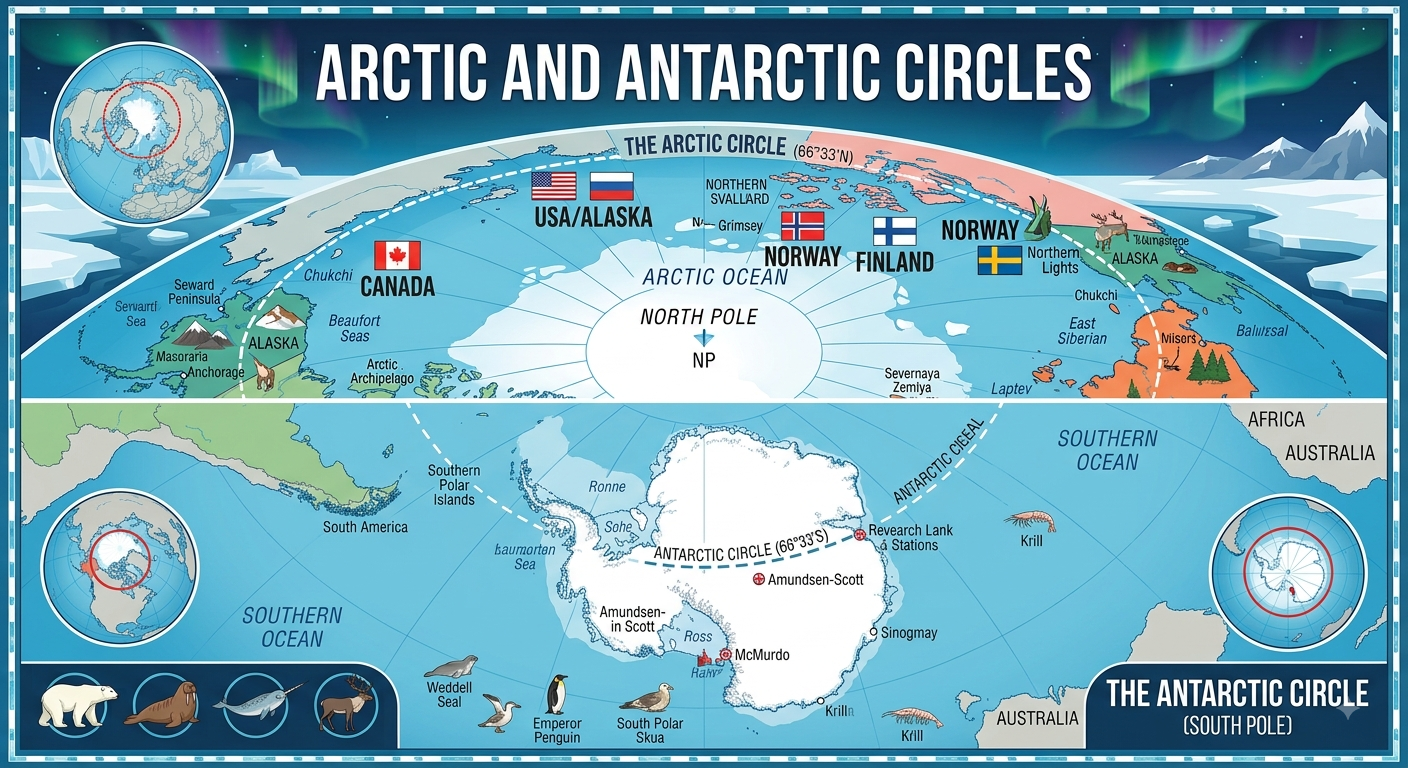
Introduction to the Arctic Circle
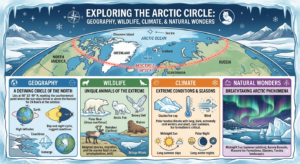
The Arctic Circle is one of the most remarkable geographic boundaries on Earth. Located at approximately 66.5° north latitude, it marks the southern limit of the Arctic region, an area shaped by extreme cold, seasonal darkness, frozen landscapes, and rich wildlife. The Arctic Circle passes through parts of countries including Norway, Sweden, Finland, Russia, the United States, Canada, Greenland, and Iceland.
Its southern counterpart is the Antarctic Circle, located at approximately 66.5° south latitude. Together, these two imaginary lines define important parts of Earth’s polar regions. Although both areas experience extraordinary seasonal changes in daylight, the Arctic and Antarctic are very different geographically and ecologically.
The Arctic is primarily an ocean surrounded by continents, while Antarctica is a continent surrounded by the Southern Ocean. Understanding both circles provides a fascinating look at Earth’s climate, ecosystems, wildlife, and the forces shaping the planet’s future.
Geography and Climate of the Arctic Circle
A Landscape of Ice, Snow, and Tundra
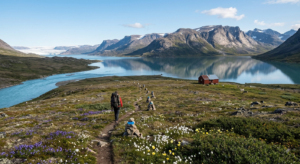
The landscape around the Arctic Circle varies considerably. Visitors may encounter vast tundra plains, glaciers, rocky mountains, frozen lakes, coastal wetlands, and enormous areas of sea ice.
Unlike Antarctica, the Arctic has no single continental landmass at its center. Much of the central Arctic consists of the Arctic Ocean, whose waters are partly covered by floating sea ice. Surrounding lands include northern parts of North America, Europe, and Asia.
The Arctic tundra has a short growing season. Trees generally cannot survive across much of the far-northern landscape because of low temperatures, strong winds, and frozen ground known as permafrost. Instead, mosses, grasses, lichens, and small shrubs dominate many areas.
Extreme Temperatures and Seasonal Darkness
The Arctic climate is strongly influenced by latitude and the seasonal movement of Earth around the Sun. During winter, some places experience weeks or even months when the Sun does not rise above the horizon. This is known as polar night.
In summer, the opposite occurs. Locations north of the Arctic Circle can experience at least one day when the Sun remains above the horizon for a full 24 hours. Farther north, the period of continuous daylight becomes much longer. This phenomenon is often called the Midnight Sun.
The Antarctic Circle experiences similar patterns in the Southern Hemisphere, but the seasons are reversed.
The Arctic Circle and Antarctic Circle Compared
The two polar circles share several characteristics, yet their environments are strikingly different.
The Arctic is an ocean surrounded by land. It supports human settlements, Indigenous communities, towns, transportation routes, and long-established cultural traditions.
Antarctica, by contrast, is a vast ice-covered continent. It has no permanent native human population, although scientists and support staff live at research stations for varying periods.
Antarctica is also covered by an enormous ice sheet, while the Arctic landscape includes extensive tundra and forests farther south, along with floating sea ice over the ocean.
These geographical differences create distinct ecosystems and wildlife communities. Polar bears are associated with the Arctic, while wild penguins naturally occur in the Southern Hemisphere, including Antarctica. Polar bears and penguins do not naturally share the same habitat.
Wildlife and Ecology
The Arctic ecosystem is home to animals that have developed remarkable adaptations for surviving cold, darkness, and seasonal food shortages.
Arctic Wildlife
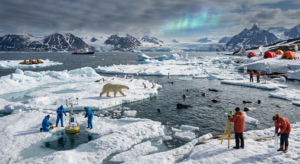
Polar bears are among the most recognizable Arctic animals. They depend heavily on sea ice for hunting seals and moving across their environment. Changes in sea-ice conditions therefore have significant consequences for their survival.
Arctic foxes have thick fur and compact bodies that help conserve heat. Their coats also change color seasonally in many populations, providing camouflage against different landscapes.
Reindeer, known as caribou in North America, travel across enormous areas in search of food. Their broad hooves help them move through snow, soft ground, and tundra.
Seals are essential members of Arctic marine ecosystems, while whales such as bowhead, beluga, and narwhal inhabit northern waters. During warmer months, huge numbers of migratory birds arrive to breed and feed before returning south.
Survival in an Extreme Environment
Arctic animals have evolved a range of survival strategies. Thick fur, layers of body fat, seasonal camouflage, specialized feet, migration, and changes in metabolism all help animals cope with harsh conditions.
Food availability also changes dramatically through the year. Some species migrate, while others remain active throughout winter. The timing of breeding, feeding, and migration is closely linked to temperature, daylight, sea ice, and seasonal plant growth.
People and Life in the Arctic
The Arctic is not an empty wilderness. Millions of people live across the broader Arctic region, including numerous Indigenous communities with deep cultural and historical connections to the land and sea.
Communities such as the Inuit, Sámi, and many Indigenous peoples of northern Russia, Alaska, and Canada have developed knowledge and traditions adapted to Arctic conditions. Hunting, fishing, herding, gathering, craftsmanship, and travel across seasonal landscapes have traditionally played important roles in many communities.
Modern Arctic life combines these traditions with contemporary education, technology, transportation, healthcare, and employment. However, remote communities can face challenges involving infrastructure, high living costs, changing food systems, and access to essential services.
Climate change adds another layer of difficulty. When sea ice becomes less predictable or permafrost changes, traditional travel routes, buildings, hunting practices, and local ecosystems can all be affected.
Climate Change in the Arctic
The Arctic has become one of the most important regions for understanding global climate change. Rising temperatures are contributing to reductions in seasonal sea ice, changes in snow cover, melting glaciers, and thawing permafrost.
These changes can affect Arctic wildlife directly. Species that depend on sea ice may lose important feeding, breeding, or resting areas. Changes in ocean temperatures can also influence fish populations and marine food webs.
The consequences extend beyond the Arctic. Snow and ice reflect a significant amount of sunlight back into space. When reflective ice disappears, darker ocean or land absorbs more solar energy, contributing to additional warming.
Changes in permafrost are another concern because frozen soils contain large amounts of stored organic carbon. As permafrost thaws, carbon can enter the atmosphere as carbon dioxide and methane, potentially contributing further to climate change.
Northern Lights and Other Natural Wonders
One of the most spectacular attractions of the Arctic Circle is the Aurora Borealis, commonly called the Northern Lights. These glowing curtains and arcs appear when charged particles from the Sun interact with gases in Earth’s upper atmosphere.
The best viewing conditions generally require dark skies, suitable solar activity, and relatively clear weather. For this reason, the long winter nights of the Arctic can provide excellent opportunities for aurora viewing.
The Midnight Sun offers an entirely different experience. During summer, visitors can explore landscapes under continuous daylight, sometimes seeing the Sun remain above the horizon even at midnight.
Glaciers, fjords, snowy mountains, tundra, frozen lakes, and remote coastlines add to the visual appeal of the polar region.
Visiting the Arctic Circle
Popular Arctic Destinations
Several destinations provide access to Arctic landscapes and experiences. Northern Norway, Finnish Lapland, Swedish Lapland, Iceland, Greenland, northern Canada, and Alaska are among the best-known areas for Arctic travel.
Experiences vary by destination and season, but travelers may encounter:
- Northern Lights tours
- Dog sledding and snowmobile excursions
- Wildlife watching
- Cross-country skiing and snowshoeing
- Arctic cruises
- Hiking across tundra and mountain landscapes
- Visits to Indigenous cultural centers and communities
Travelers should prepare carefully for rapidly changing weather, limited daylight in winter, and remote conditions. Responsible tourism is especially important because many Arctic environments are fragile and recover slowly from disturbance.
Conservation and the Future
Protecting the Arctic requires cooperation among governments, Indigenous communities, scientists, conservation organizations, businesses, and travelers. Wildlife conservation is particularly important as habitats change and human activity expands in some northern areas.
Scientific research plays a crucial role. Researchers monitor sea ice, ocean temperatures, glaciers, wildlife populations, atmospheric conditions, and permafrost to understand how the Arctic ecosystem is changing.
Sustainable tourism can also contribute positively when it minimizes environmental damage and respects local communities. Travelers can choose responsible operators, follow wildlife-viewing guidelines, avoid disturbing animals, and respect Indigenous cultures and local regulations.
The future of the Arctic Circle will depend heavily on global efforts to reduce greenhouse-gas emissions. Local conservation can protect important habitats, but the long-term stability of the polar climate is closely connected to worldwide climate action.
Conclusion
The Arctic Circle and Antarctic Circle represent two extraordinary boundaries on our planet. Both experience extreme seasonal daylight and darkness, but their geography, wildlife, and human presence are very different. The Arctic combines a frozen ocean, tundra, wildlife, and thriving communities, while Antarctica is a vast icy continent dedicated primarily to scientific research and international cooperation.
The Arctic Circle remains especially important because its environment is closely connected to global climate systems. Its sea ice, wildlife, landscapes, and communities are undergoing rapid changes, making the region a vital focus of scientific research and conservation.
For travelers, the Arctic offers unforgettable experiences, from the Northern Lights and Midnight Sun to wildlife encounters and immense frozen landscapes. For the rest of the world, however, the Arctic is more than a destination. It is a sensitive part of Earth’s environmental system—and understanding and protecting it is essential to understanding our shared future.
✍️ Written by Vimal Bhagat
🌎 Sharing fresh news, trending stories & interesting updates from around the world.
💙 Read more: arcticcircle.us