Introduction to the Arctic Circle
The Arctic Circle is one of the most fascinating geographic boundaries on Earth. Located at approximately 66.5° north latitude, it marks the southern limit of a region where, at least once each year, the Sun can remain above the horizon for 24 hours and, during another part of the year, remain below it for 24 hours.
Stretching across parts of North America, Europe, and Asia, the Arctic Circle passes through countries including Canada, the United States, Greenland, Iceland, Norway, Sweden, Finland, and Russia. Beyond its geographic significance, the region is an important center for climate research, wildlife conservation, Indigenous cultures, and scientific exploration.
The Arctic is not simply a frozen landscape. It is a complex polar region containing oceans, islands, glaciers, tundra, forests at its southern edges, and highly adapted ecosystems. What happens here can also influence weather, oceans, sea levels, and climate patterns far beyond the Arctic region.
Geography and Climate
A Land of Ice, Snow, and Tundra
The landscape around the Arctic Circle changes dramatically with location and season. Some areas contain enormous ice sheets and glaciers, while others are dominated by treeless tundra covered with mosses, lichens, grasses, and small shrubs.
The Arctic Ocean is another defining feature. Large areas of its surface can freeze during the colder months, creating sea ice that expands and contracts throughout the year. Unlike land-based glaciers, sea ice floats on the ocean and plays an important role in the Arctic climate.
Snow and ice reflect a significant amount of sunlight back into space. This reflective property, known as the albedo effect, helps regulate temperatures in the region.
Extreme Seasonal Conditions
The Arctic climate is characterized by long, cold winters and short summers. Temperatures vary considerably across the region, depending on latitude, elevation, proximity to the ocean, and local geography.
One of the Arctic’s most remarkable features is the polar day and polar night. During summer, locations north of the Arctic Circle can experience continuous daylight for days or even months. In winter, the opposite occurs, with extended periods when the Sun does not rise above the horizon.
These unusual light conditions influence wildlife behavior, vegetation, transportation, tourism, and everyday life.
Wildlife and Ecology
The Arctic ecosystem may appear harsh, but it supports a remarkable variety of life.
Animals Adapted to the Cold
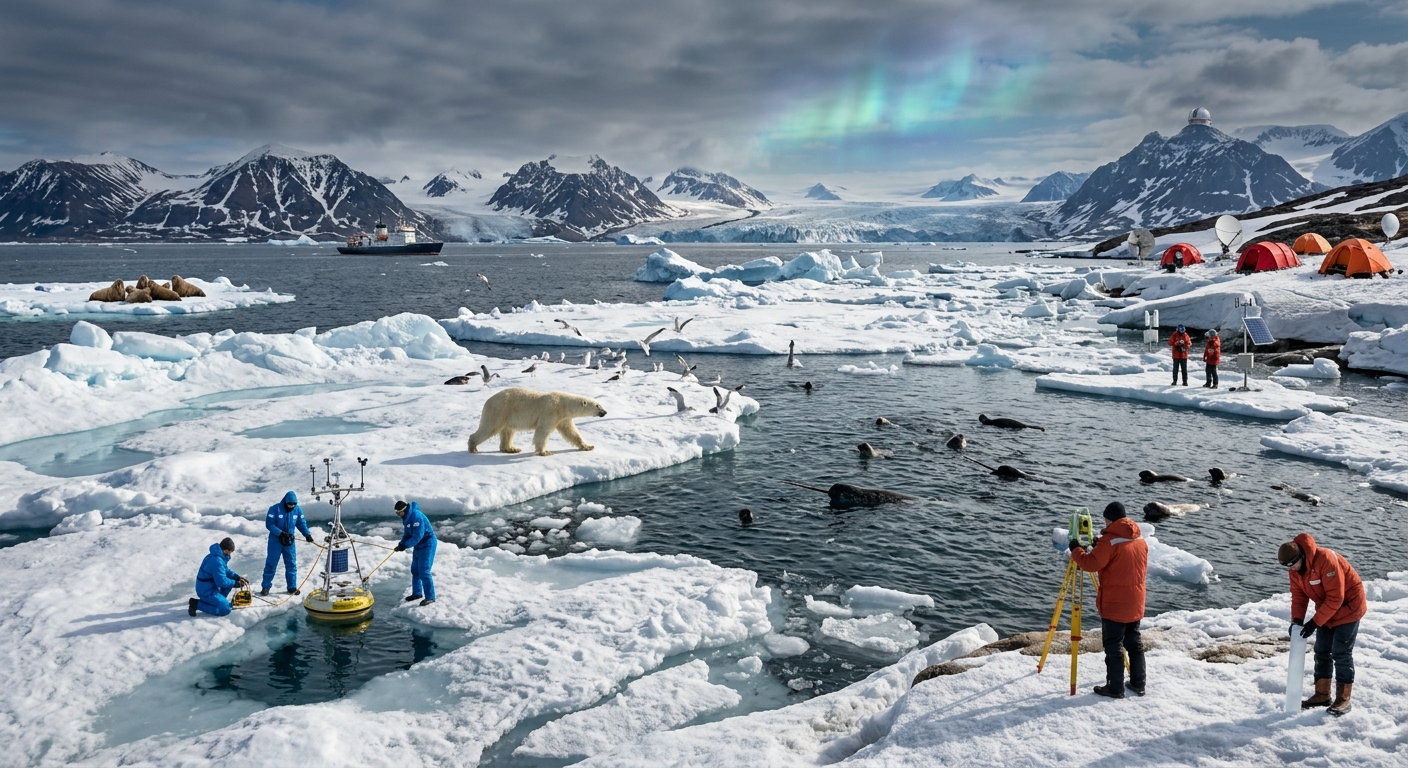
The polar bear is perhaps the most recognizable Arctic animal. Its thick fur, layer of body fat, and specialized paws help it survive cold conditions and move across snow and ice. Polar bears depend heavily on sea ice for hunting seals, making changes in ice conditions an important conservation concern.
Arctic foxes have also evolved impressive adaptations. Their dense fur provides insulation, and their coats change color seasonally in many populations, helping them blend into snowy and summer landscapes.
Reindeer, known as caribou in North America, are another important Arctic species. Their wide hooves help them travel over snow and soft ground, while their seasonal migrations allow them to follow changing food supplies.
The Arctic seas support seals, walruses, whales, and other marine animals. Species such as bowhead whales, narwhals, belugas, and several seal species depend on the region’s marine environment.
Birds of the Far North
The Arctic also becomes an important summer breeding ground for millions of migratory birds. Many species travel thousands of kilometers from southern regions to take advantage of abundant insects, plants, and long summer daylight.
This seasonal movement demonstrates how closely connected ecosystems around the world can be. A bird breeding in the Arctic may spend winter on another continent, linking distant environments through its annual migration.
People and Life in the Arctic
The Arctic is home to Indigenous peoples whose communities have developed deep relationships with the northern environment over thousands of years. Inuit, Sámi, Nenets, Chukchi, and many other Indigenous groups have diverse languages, traditions, histories, and ways of life.
Traditional livelihoods in different parts of the Arctic have included hunting, fishing, reindeer herding, gathering, and crafts. Knowledge of seasonal weather, animals, sea conditions, and landscapes has been passed between generations and remains valuable today.
Modern Arctic communities combine traditional knowledge with contemporary education, technology, transportation, healthcare, and employment. However, many communities face challenges related to remote locations, high living costs, infrastructure, changing ecosystems, and economic pressures.
Climate change adds another layer of difficulty. Changes in sea ice, snow conditions, wildlife movements, and coastal environments can affect travel routes, food systems, cultural practices, and local economies.
Climate Change in the Arctic
The Arctic is one of the most closely watched regions in global climate science because it is experiencing significant environmental changes.
Melting Sea Ice
Arctic sea ice naturally expands during winter and shrinks during summer. However, long-term observations show substantial changes in the extent, thickness, and seasonal behavior of Arctic sea ice.
Less sea ice can affect animals that depend on frozen marine habitats. It can also alter ocean ecosystems and influence human activities in northern coastal communities.
A Changing Arctic Ecosystem
Warming conditions can change the distribution of plants and animals. Some species may move northward as temperatures rise, while species specially adapted to cold environments can face increasing competition and habitat loss.
Changes in snow cover, permafrost, glaciers, and ocean conditions can also reshape Arctic landscapes.
The importance of these changes extends beyond the polar region. The Arctic influences ocean circulation, atmospheric processes, and global climate systems. Scientists therefore study the region carefully to understand both local changes and their wider consequences.
Northern Lights and Natural Wonders
Aurora Borealis
The Northern Lights, or Aurora Borealis, are among the most spectacular natural phenomena associated with the Arctic Circle. They occur when energetic particles from the Sun interact with gases in Earth’s upper atmosphere, producing moving displays of light.
The colors and shapes of an aurora can change rapidly. Green is especially common, while red, purple, and other colors can also appear under suitable conditions.
Dark skies, low light pollution, and periods of strong auroral activity make many Arctic locations attractive for Northern Lights viewing.
Midnight Sun
The Midnight Sun offers a completely different experience. During the Arctic summer, the Sun can remain visible around midnight instead of disappearing below the horizon.
This prolonged daylight creates unusual landscapes and gives visitors long hours for hiking, photography, wildlife observation, and exploring northern communities.
Visiting the Arctic Circle
Arctic travel has become increasingly popular for people seeking unusual landscapes and memorable outdoor experiences. Destinations in northern Norway, Finland, Sweden, Iceland, Greenland, Canada, Alaska, and Russia offer different combinations of scenery, culture, wildlife, and seasonal activities.
Popular experiences include:
- Northern Lights tours
- Dog sledding and snowmobile excursions
- Wildlife watching
- Snowshoeing and winter hiking
- Visiting Indigenous cultural centers
- Glacier and ice experiences
- Summer hiking beneath the Midnight Sun
Travel conditions can be demanding. Visitors should prepare for rapidly changing weather, cold temperatures, limited daylight during winter, and long distances between communities. Responsible travelers should also follow local environmental rules, respect Indigenous communities, avoid disturbing wildlife, and minimize waste.
Conservation and the Future
Protecting the Arctic requires cooperation between scientists, governments, Indigenous communities, conservation organizations, businesses, and travelers.
Wildlife conservation programs help monitor vulnerable species and protect important habitats. Scientific research provides information about sea ice, ocean temperatures, atmospheric conditions, wildlife populations, and changing ecosystems.
Sustainable tourism can also contribute when it is carefully managed. Small-group travel, local guides, responsible wildlife observation, and support for local businesses can help reduce environmental pressure while providing economic opportunities for northern communities.
The future of the Arctic will depend heavily on how the world responds to climate change. Continued scientific observation is essential because the region is changing rapidly, and long-term measurements help researchers understand what those changes mean.
Conclusion
The Arctic Circle is far more than an imaginary line on a map. It is a dynamic region where geography, climate, wildlife, science, culture, and human activity are closely connected.
Its frozen seas provide habitat for Arctic wildlife, its landscapes support unique ecosystems, and its skies produce extraordinary phenomena such as the Northern Lights and Midnight Sun. At the same time, rapid environmental changes make the Arctic one of the most important places on Earth for climate research.
Whether viewed through the eyes of a scientist, traveler, Indigenous community member, conservationist, or nature enthusiast, the Arctic Circle offers valuable lessons about our planet. Understanding and protecting this remarkable region will remain important for generations to come.
✍️ Written by Vimal Bhagat
🌎 Sharing fresh news, trending stories & interesting updates from around the world.
💙 Read more: https://arcticcircle.us
