Introduction to the Arctic Circle
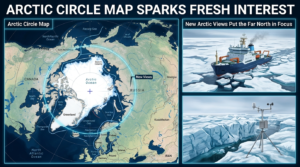
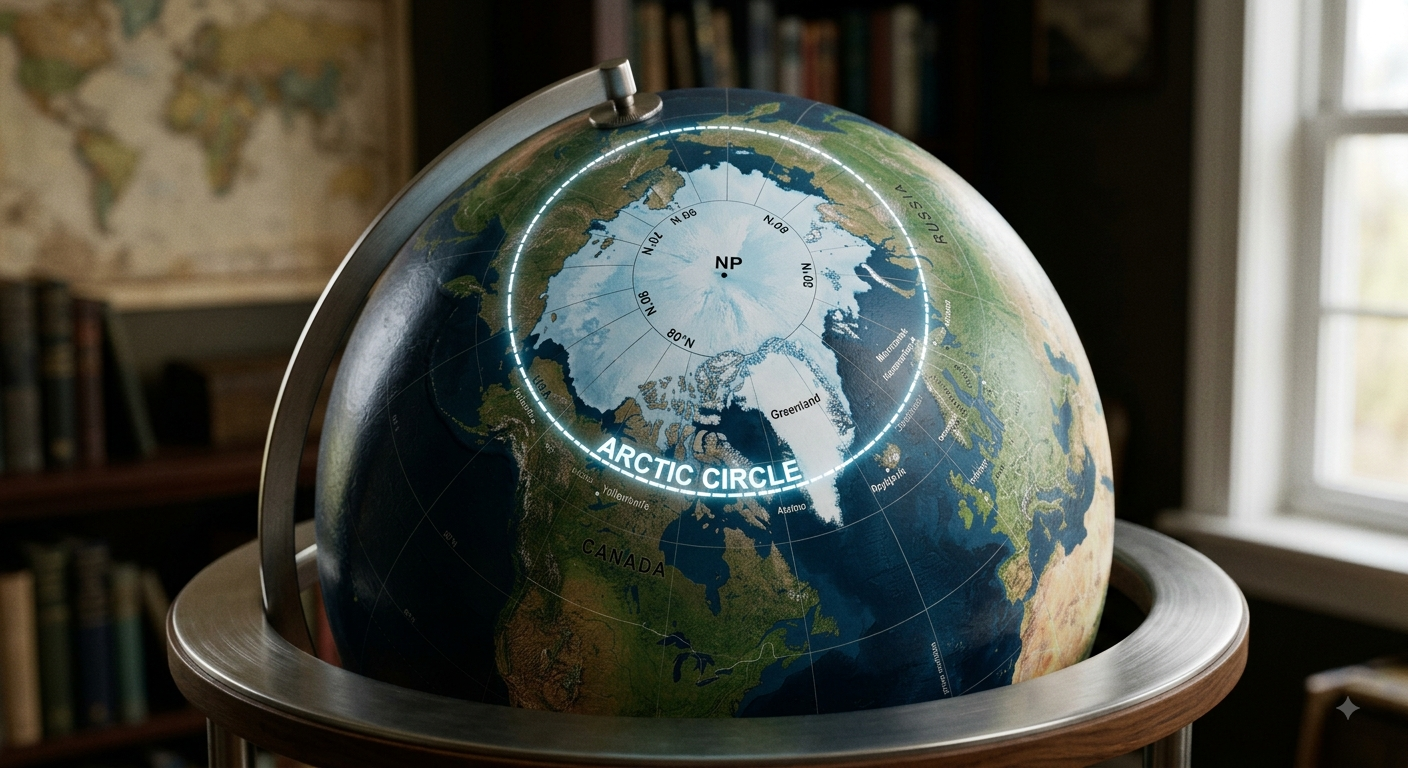
Look at a globe and trace the northernmost major circle of latitude around the Earth. This imaginary line marks one of the planet’s most fascinating geographic boundaries: the Arctic Circle. Located in the Northern Hemisphere, it surrounds much of the Arctic region and helps define an area where seasonal daylight behaves very differently from most other parts of the world.
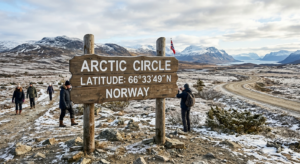
The Arctic Circle lies at approximately 66°33′ north latitude, although its precise position shifts slightly over time because Earth’s axial tilt changes. It crosses parts of several countries, including Canada, Denmark through Greenland, Finland, Iceland, Norway, Russia, Sweden, and the United States through Alaska.
Its importance extends far beyond its appearance on a globe. The Arctic Circle helps scientists understand Earth’s climate system, marks the approximate boundary of the region affected by polar day and polar night, and encompasses remarkable ecosystems adapted to cold, darkness, ice, and dramatic seasonal changes.
Understanding the Arctic Circle on a Globe
What the Arctic Circle Represents
On a globe, the Arctic Circle appears as a horizontal line encircling the Northern Hemisphere. Unlike borders between countries, it is not a physical boundary. Instead, it is a geographical reference line based on latitude.
The line marks the southernmost latitude at which, under the right seasonal conditions, the Sun can remain above the horizon for a full 24 hours. At the North Pole, this effect becomes much more extreme, with roughly six months of daylight followed by roughly six months of darkness.
Latitude and the Northern Hemisphere
Latitude measures how far a location lies north or south of the Equator. The Equator is 0°, while the North Pole is 90° north. The Arctic Circle sits between them at about 66.5° north.
Because Earth is tilted on its axis by approximately 23.4 degrees, sunlight reaches different parts of the planet at different angles throughout the year. This axial tilt is responsible for the Arctic’s extraordinary seasonal daylight patterns.
Why the Arctic Circle Is Unique
The Arctic Circle is unique because it represents a zone where Earth’s rotation and axial tilt create some of the most unusual lighting conditions on the planet. During summer, areas north of the circle can experience the midnight sun, when the Sun remains visible at midnight. During winter, those same areas can experience polar night, when the Sun does not rise above the horizon for at least 24 hours.
Geography and Climate of the Arctic Region
The landscape surrounding the Arctic Circle is varied and often spectacular. It includes tundra, mountains, glaciers, frozen lakes, coastal plains, islands, and vast areas of ocean covered by seasonal or permanent ice.
Ice, Snow, Tundra, and Frozen Seas
Much of the Arctic landscape is shaped by cold temperatures and permafrost. Permafrost is ground that remains frozen for long periods, sometimes for thousands of years. In coastal and oceanic areas, sea ice expands during the cold season and retreats during warmer months.
The Arctic tundra has few trees because of the short growing season, cold conditions, and frozen ground. Instead, mosses, lichens, grasses, and small shrubs dominate many landscapes.
Extreme Temperatures and Seasonal Light
The Arctic climate varies considerably from one location to another. Coastal areas can be influenced by relatively warmer ocean currents, while inland areas may experience much more severe winters.
Winter brings long periods of darkness and intense cold. Summer can bring surprisingly bright conditions, with continuous daylight in areas north of the Arctic Circle. These seasonal extremes influence everything from plant growth to animal behavior and human activities.
Wildlife and Ecology
The Arctic ecosystem may appear harsh, but it supports a remarkable variety of life. Arctic wildlife has developed specialized adaptations that allow animals to conserve heat, find food, migrate, and reproduce in challenging conditions.
Polar Bears and Arctic Foxes
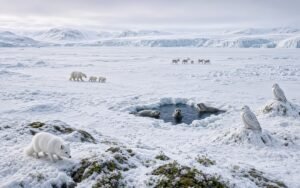
Polar bears are among the best-known animals associated with the Arctic. Their thick fur, substantial body fat, and large paws help them survive cold environments and move across snow and sea ice.
Arctic foxes are smaller but equally well adapted. Their dense fur provides insulation, while seasonal changes in coat color can help them blend into snowy or rocky surroundings.
Reindeer, Caribou, Seals, and Whales
Reindeer, known as caribou in North America, travel across large Arctic landscapes in search of food. Their wide hooves help them move through snow and soft ground.
Seals are particularly important to the marine food web. Several species use sea ice as resting or breeding platforms. Arctic waters also support whales, including bowhead whales, belugas, narwhals, and gray whales in different parts of the region.
Migratory Birds
Birds are among the Arctic’s most remarkable seasonal travelers. Many species arrive during the brief Arctic summer, when long daylight hours produce an abundance of insects and plant growth. They may then migrate thousands of kilometers to warmer regions before winter returns.
These journeys connect the Arctic ecosystem with habitats across continents, demonstrating how changes in one region can influence wildlife far beyond the polar region.
People and Life in the Arctic
The Arctic is not an empty wilderness. It has been home to Indigenous peoples for thousands of years, and communities continue to maintain deep cultural, economic, and environmental connections with the land and sea.
Indigenous Communities and Traditional Lifestyles
Indigenous peoples of the Arctic include communities such as the Inuit, Sámi, Yupik, and many others. Their cultures and traditions differ considerably, but many have developed detailed knowledge of seasonal weather, wildlife, ice conditions, plants, and landscapes.
Traditional activities have included hunting, fishing, herding, gathering, and travel across snow and ice. In many communities, these activities remain culturally important even as modern technologies and economies have changed everyday life.
Modern Challenges
Arctic communities face challenges associated with changing sea ice, shifting wildlife patterns, infrastructure difficulties, high transportation costs, and rapid environmental change. For Indigenous communities in particular, environmental changes can affect traditions and food systems that depend on predictable relationships with the land.
Climate Change in the Arctic
The Arctic has become one of the most important regions for understanding global climate change. Rising temperatures are contributing to major changes in snow cover, glaciers, permafrost, and sea ice.
Melting Sea Ice and Rising Temperatures
Arctic sea ice naturally expands and contracts with the seasons, but long-term warming has reduced the extent and thickness of summer sea ice. Warmer conditions also contribute to melting glaciers and thawing permafrost.
These changes can affect wildlife that relies on ice for hunting, resting, breeding, or traveling. They can also alter landscapes and coastal environments.
Why Arctic Changes Matter Globally
The Arctic does not exist separately from the rest of the planet. Bright snow and ice reflect a significant amount of sunlight back into space. When they disappear, darker ocean and land surfaces absorb more solar energy.
Changes in Arctic conditions can therefore influence atmospheric circulation, ocean systems, ecosystems, and global climate patterns. The region also stores large amounts of carbon in frozen ground, making permafrost changes an important scientific concern.
Northern Lights and Other Natural Wonders
The Arctic Circle is famous for natural phenomena that are difficult to experience elsewhere.
Aurora Borealis
The Northern Lights, or aurora borealis, occur when charged particles from the Sun interact with Earth’s upper atmosphere. The resulting displays can appear as glowing curtains, arcs, or waves of green, pink, purple, and other colors across the night sky.
The best viewing opportunities generally occur during dark, clear nights away from artificial light, particularly during the darker months of the year.
Midnight Sun
The midnight sun offers the opposite experience. During part of the Arctic summer, the Sun remains above the horizon for 24 hours or more. The phenomenon becomes increasingly pronounced as one travels closer to the North Pole.
This continuous daylight creates a distinctive atmosphere, allowing visitors to experience landscapes under the Sun even at times when most people expect darkness.
Visiting the Arctic Circle
Arctic travel has become increasingly popular among people seeking unusual landscapes, wildlife, and winter experiences. Destinations within or near the Arctic Circle include northern Norway, Finnish and Swedish Lapland, Icelandic areas, Greenland, Alaska, and northern Canada.
Travel experiences can include:
- Watching the Northern Lights
- Dog sledding across snowy landscapes
- Visiting Arctic villages and cultural sites
- Wildlife watching
- Snowshoeing and winter hiking
- Experiencing the midnight sun
- Exploring glaciers and frozen landscapes
Travel conditions can be demanding. Visitors should prepare for cold weather, limited daylight in winter, changing transportation schedules, and rapidly changing conditions. Responsible Arctic travel also means respecting local communities, wildlife, protected areas, and fragile environments.
Conservation and the Future
Protecting the Arctic requires cooperation among scientists, governments, Indigenous communities, conservation organizations, businesses, and travelers.
Protecting Wildlife and Ecosystems
Wildlife conservation is especially important because Arctic species depend on interconnected habitats. Protecting marine environments, breeding grounds, migration routes, and coastal ecosystems can help maintain biodiversity.
Scientific research is equally important. Researchers monitor sea ice, temperatures, wildlife populations, ocean conditions, glaciers, and permafrost to understand how the Arctic is changing.
Sustainable Tourism and Research
Tourism can provide economic opportunities for Arctic communities, but it needs to be managed carefully. Sustainable tourism should minimize environmental damage, respect local cultures, and avoid disturbing wildlife.
The future of the Arctic will depend partly on how effectively the world responds to climate change. Continued scientific research can help communities and policymakers prepare for environmental changes while improving understanding of Earth’s climate system.
Conclusion
The Arctic Circle on a globe may look like a simple imaginary line, but it represents a region of extraordinary geographical, ecological, cultural, and scientific importance. From polar night and the midnight sun to sea ice, tundra, Arctic wildlife, and the Northern Lights, the Arctic region displays some of Earth’s most distinctive natural phenomena.
It is also a place undergoing rapid transformation. Changes in temperature, sea ice, permafrost, and wildlife are reshaping ecosystems and affecting communities. For scientists, the Arctic provides vital clues about the planet’s changing climate; for travelers, it offers unforgettable natural experiences; and for everyone, it serves as a reminder of how closely Earth’s systems are connected.
Understanding and protecting the Arctic Circle is therefore not only about preserving a remote polar landscape. It is about safeguarding wildlife, supporting Arctic communities, advancing scientific knowledge, and understanding the future of our shared planet.
✍️ Written by Vimal Bhagat
🌎 Sharing fresh news, trending stories & interesting updates from around the world.
💙 Read more: arcticcircle.us