Arctic Circle restaurants are suddenly getting plenty of attention as travelers look beyond snowy views and Northern Lights for something warm, local, and memorable. On Sunday, August 16, 2026, restaurants around Rovaniemi in Finnish Lapland are showing just how much food has become part of the Arctic travel experience. I keep hearing about reindeer, Arctic fish, berries, fire-cooked meals, and cozy places where the cold outside feels very far away.
I used to think the Arctic was mostly about ice, forests, and frozen roads. Then I looked closer at the food scene, and wow, there is much more going on. Rovaniemi, where the Arctic Circle passes through the city, has a wide restaurant selection, with local tourism officials listing dozens of places to eat.
The funny part is that the biggest surprise may not be the expensive meals. It can be the simple northern food. A warm bowl, some fish, berries, bread, or reindeer can suddenly feel like a whole Arctic story on one plate. And yes, I would probably take a picture before eating it, because why not.
The dining scene around Rovaniemi has grown along with tourism. Recent restaurant guides describe a city with Finnish and Lapland cooking alongside Korean, Vietnamese, Italian, Mexican, pizza, burgers, döner, and other international choices. That means visitors do not have to eat the same thing every day, even when the landscape outside looks like it belongs in a winter movie.
But traditional food is still the big star.
Reindeer is one of the dishes that keeps appearing in conversations about Arctic dining. It is strongly linked with Lapland and is served in different styles, from traditional preparations to modern restaurant plates. Some restaurants pair it with local vegetables, berries, or sauces, giving the old northern ingredient a newer look.
Fish is another major part of the story. Northern waters have long shaped the food culture of the region, and Arctic restaurants often build menus around fish and other ingredients associated with the surrounding environment. At Taiga Restaurant, for example, the menu highlights reindeer, Arctic fish, and berries while focusing on locally sourced Lapland ingredients.
There is something almost strange about eating this kind of food while looking out at a landscape covered in snow. I imagine the first bite can make the whole trip feel more real. You are not just visiting the Arctic. You are tasting a small part of it.
One place getting attention is Three Elves Restaurant in Santa Claus Holiday Village. The restaurant sits in the heart of the village and focuses on Lappish ingredients and northern flavors. Its menu includes salmon dishes and reindeer steaks, while the setting adds a strong Christmas feeling throughout the year. The restaurant can accommodate around 160 guests and offers dinner service every day from 3 p.m., according to Visit Rovaniemi.
That year-round Christmas feeling is probably one of the wildest things about the place. Most people think of Christmas as one short season. In Santa Claus Village, the idea keeps going. You can walk around, see Christmas-themed attractions, and then sit down for a meal that feels almost like part of the story.
And then there are glass igloos.
Yes, people can enjoy a meal in a glass igloo at Three Elves Restaurant. The idea sounds almost too perfect. Snow outside, warm food inside, and glass above your head. If the sky is clear, the setting can become the main event before the dessert even arrives.
Another interesting name is Lapland Restaurant Kotahovi. It is located in Santa Claus Village and takes its inspiration from the traditional Finnish kota hut. The restaurant says its menu combines authentic Lappish flavors with modern Nordic cooking. Reindeer dishes are part of that menu, and the dining room uses a firelit atmosphere to create a warm northern feeling.
Kotahovi also has a rather different approach to reservations. The restaurant says it does not take reservations and instead welcomes guests in the order they arrive. That small detail could matter to travelers planning a busy day around Santa Claus Village. Sometimes the best plan is simply to arrive hungry and hope the table gods are kind.
There are also restaurants that mix local food with a more modern style. Rakas Restaurant & Bar is one example. Its food uses local ingredients with a modern twist, and the restaurant is connected with the Arctic TreeHouse Hotel in Rovaniemi. Its summer activities can include outdoor dining experiences beside the Kemijoki River, with a campfire and the bright northern evening as part of the setting.
That is where Arctic dining gets interesting for me. The food is only half of the experience.
The other half is where you eat it.
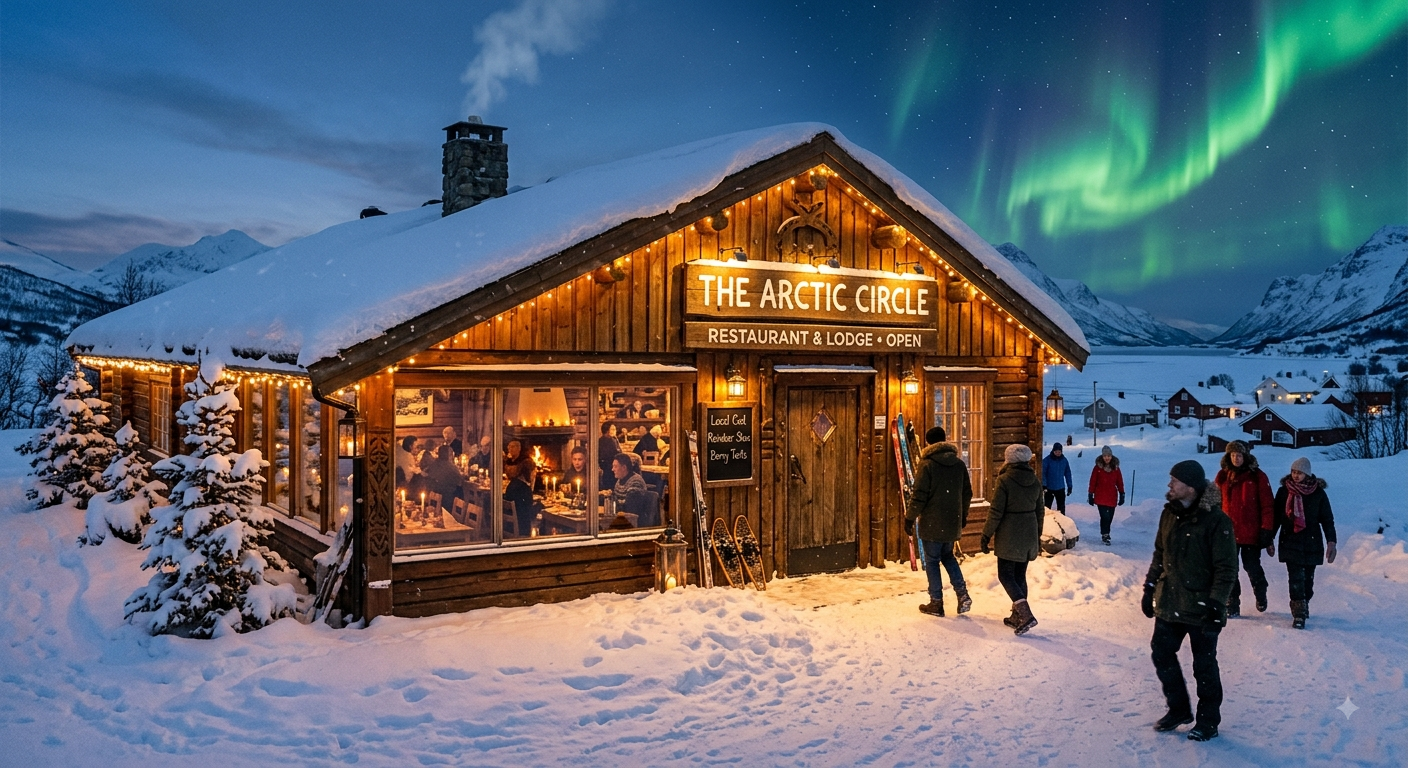
A restaurant in a normal city might have nice walls and soft lights. In Lapland, the surroundings can do half the decorating for free. Forests, rivers, snow, northern light, wooden buildings, glass roofs, and traditional huts can become part of the meal itself.
Rovaniemi’s official tourism information currently lists 67 restaurants and includes everything from ordinary dining to snow restaurants and sustainable choices. So the idea that Arctic dining means one lonely restaurant in the middle of nowhere is simply not true.
There are quick meals too.
Not every traveler wants a long dinner after spending hours outside. Rovaniemi’s restaurant scene has grown enough to cover those cravings, with recent local guides pointing to everything from late-night pizza and kebab to more formal tasting menus.
That mix may be one reason the food scene feels more lively than outsiders expect.
Still, there is a clear push toward local ingredients. Restaurants are using berries, fish, reindeer, mushrooms, herbs, and other northern products to create dishes that feel connected to Lapland. The style can be old-fashioned in one restaurant and very modern in another. Same region, different plate.
The story gets even more interesting when winter arrives.
Santa’s Cuisine at Santa Claus Village is scheduled to operate from November 1, 2026, through March 31, 2027. The restaurant is designed for buffet dining, groups, private events, and family celebrations, with seating for up to 120 people. For winter visitors, that puts another large dining option directly inside one of Rovaniemi’s biggest tourist areas.
Winter is obviously a major season here.
Visitors come hoping to see the Northern Lights, ride snowmobiles, meet reindeer, visit Santa Claus Village, and explore the snowy forests. Then they need food. Lots of it. Cold air has a way of making dinner sound like an emergency.
This is where Arctic Circle restaurants have a clever advantage. A warm restaurant is not just a place to eat. It becomes a shelter, a meeting point, and sometimes the memory of the whole evening.
Imagine walking through freezing air after a Northern Lights trip. Your gloves are cold. Your boots are wet. Then a door opens. Warm air hits your face. You smell grilled food. Someone puts a hot drink on the table.
Suddenly, the Arctic feels very friendly.
That emotional side of northern dining is hard to measure, but it may be exactly what travelers remember.
There is also a growing interest in higher-end Arctic cuisine. Recent coverage of Rovaniemi’s food scene points to fine dining, modern Nordic dishes, panoramic restaurants, and menus that combine local ingredients with international ideas.
So the Arctic food story is not frozen in the past.
It is changing.
Chefs are taking ingredients connected with old Lapland traditions and presenting them in new ways. A traditional ingredient might appear on a modern tasting menu. A familiar berry may become a sauce or dessert. Fish can be presented with delicate Nordic techniques instead of simply being cooked in a basic style.
I find that part especially exciting because it gives the region two food identities at once. One is deeply traditional. The other is curious and experimental.
And tourists seem to like both.
The demand for local food also fits the wider travel trend of wanting experiences that feel authentic. People do not only want to take a photo at the Arctic Circle line. They want something to remember after the photo is gone.
A meal can do that.
You may forget the name of a street. You may forget which bus you took. But you probably remember eating reindeer stew while snow fell outside a wooden restaurant. Or drinking something hot while watching the sky through a glass roof. Food can stick in the memory in a sneaky little way.
There is, however, one thing travelers should remember. Restaurant opening hours can change with the season. Taiga Restaurant, for example, currently says it is closed from June 14 to September 14 and will reopen in September. Other restaurants have their own seasonal schedules, especially those connected with winter tourism.
That means checking the restaurant’s current schedule before making a special trip is a smart move.
The Arctic Circle food scene also shows how much the region has changed as a travel destination. Rovaniemi is not simply a stop where visitors take one picture and leave. It has become a place where accommodation, activities, local culture, and food all work together.
And perhaps that is the real gossip from the north.
The Arctic is not only serving cold-weather adventure anymore. It is serving dinner too, and the dinner can be surprisingly sophisticated.
On one table there might be a traditional reindeer dish. At another, someone could be eating a modern Nordic tasting menu. Across the street, a traveler may be holding a pizza. Somewhere else, a family is sitting beside a fire and eating salmon.
All of it belongs to the same Arctic Circle story.
I would not call it just a restaurant trend. It looks more like a change in how people experience the North. The landscape brings visitors there, but food gives them another reason to stay a little longer.
And honestly, I get it.
If I had spent the day chasing the Northern Lights, walking through snowy forests, or visiting reindeer farms, I would want one thing at the end.
A warm table.
A big plate.
Something local.
Maybe a berry dessert too, because the Arctic deserves a sweet ending.
For now, the restaurant scene around the Arctic Circle looks busy, varied, and increasingly confident. Official tourism listings show a broad choice of dining venues, while current restaurant information points toward a mixture of traditional Lappish cooking, modern Nordic food, international flavors, and memorable settings.
So the next time someone says the Arctic is only about ice, I might disagree.
There is heat up there.
It is coming from the kitchen.
And judging by the growing attention around Arctic Circle restaurants, people have started noticing.
✍️ Written by Vimal Bhagat
🌎 Sharing fresh news, trending stories & interesting updates from around the world.
💙 Read more: arcticcircle.us