I searched for a current news update on “Arctic Circle Symphony,” but I could not find a credible 2026 news report or verified event by that exact name. The phrase currently appears online mainly in connection with a Symphony Duet Mini evaporative air cooler, not a musical event or Arctic news story.
So, I can’t honestly present an invented event as breaking news. What I can report is that the Arctic itself remains a place of major scientific and environmental attention. The Arctic Circle sits at roughly 66°34′ north latitude. It marks the region where the sun can remain above the horizon through the summer solstice and below it through the winter solstice.
When I look toward the Arctic, the first thing that catches me is the strange silence. It feels almost like music. Wind moves over snow. Ice shifts slowly. The sky changes color. And sometimes the whole place seems to hum, even when nobody is singing.
That is why the words “Arctic Circle Symphony” sound so dramatic. They bring together two very different ideas. One is music. The other is one of Earth’s coldest regions. Together, they create a picture that feels huge and mysterious.
But there is no verified major news event under this exact title that I could confirm today, August 16, 2026. I would rather say that clearly than create names, dates, performers, or quotes that do not exist.
The real Arctic story is already powerful enough.
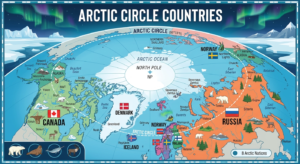
The Arctic is the northernmost region of Earth. It includes the Arctic Ocean and northern parts of several countries, including Canada, Russia, Greenland, Iceland, Norway, Sweden, Finland and the United States through Alaska.
I find the landscape hard to imagine. Much of it is ocean. Much of that ocean can freeze. Huge areas can become covered with sea ice and snow. Yet beneath the cold surface, life keeps moving.
Tiny organisms grow in the water. Fish feed on them. Birds follow the food. Seals hunt. Whales travel through the cold sea. Walruses rest on ice. Polar bears depend heavily on the frozen environment.
It is not a dead white world.
It is alive.
And this is where the “symphony” idea becomes interesting. The Arctic has its own natural sounds. Wind can roar across open land. Waves can strike ice. Cracks can appear in frozen surfaces. Birds call across wide spaces. Whales communicate underwater.
None of this is an official symphony, of course.
But if somebody wanted to create a musical story about the Arctic, there would be no shortage of sounds to use.
The Arctic also has another story that is much less romantic.
It is warming.
The National Snow and Ice Data Center explains that the Arctic and Antarctic help cool the planet and influence weather patterns. Changes in the Arctic can affect places far away from the polar region.
That means an Arctic story is not only about snow and northern lights.
It is about the rest of the world too.
Sea ice reflects sunlight back toward space. Dark ocean water absorbs much more solar energy. When ice disappears, more of that energy can be absorbed by the ocean. This creates a powerful connection between the frozen north and the planet’s wider climate system.
I think this is the part that deserves more attention.
The Arctic can look distant. It can seem like a place far away from normal life. But changes there do not stay there.
Scientists have watched Arctic sea ice decline over the modern period. The region has become one of the clearest symbols of a changing climate. The World Wildlife Fund says the Arctic is warming rapidly and that the changes are affecting life both on land and at sea.
And the changes are not only about ice.
Animals face changing habitats. Indigenous communities face environmental changes that can affect travel, food systems and traditional ways of living. Coastal areas can face new pressures. Shipping routes and resource interests can also become more important as conditions change.
That makes the Arctic a place of both beauty and tension.
I can imagine a real Arctic symphony beginning very quietly. Maybe one low note. Then the sound of wind. A soft rhythm like falling snow. After that, something sharper, representing cracking ice.
Then silence again.
It would not need a huge orchestra.
The landscape itself would provide most of the drama.
Still, readers should be careful with the phrase “Arctic Circle Symphony.” At present, the strongest search result for that exact wording is surprisingly not a concert. It refers to the Symphony Duet Mini, a portable evaporative air cooler. The product listing uses “Arctic Circle Symphony Duet” in its title.
That explains why the phrase may appear in searches even though it does not point to a verified Arctic music story.
The confusion is easy to understand.
“Arctic Circle” sounds like a location.
“Symphony” sounds like music.
Put them together and it sounds like a spectacular polar concert.
But search results do not currently support that story.
I would not want to turn a catchy phrase into fake news.
Instead, the real Arctic gives us something better: a story that is still unfolding.
The Arctic Circle itself is a moving geographic reference over long periods because Earth’s orientation and orbital conditions change. NOAA describes it as approximately 66 degrees and 34 minutes north latitude.
The region also experiences some of the strangest sunlight conditions on Earth.
During part of the summer, areas north of the Arctic Circle can experience continuous daylight. During winter, they can experience periods when the sun does not rise.
Imagine waking up and finding the sun still there.
Then imagine the opposite.
Weeks of darkness can change how a place feels. It can change work, travel, sleep and daily life. The darkness is not just a background detail. It becomes part of the rhythm of life.
That rhythm could easily become music.
Maybe that is why a title such as “Arctic Circle Symphony” feels so natural.
The Arctic already behaves like a giant orchestra.
The wind plays.
The ocean moves.
Ice cracks.
Animals call.
People live and work.
The sky changes.
And the seasons keep turning.
But there is another sound entering this picture.
Human activity.
Ships move through northern waters. Industrial projects operate across parts of the Arctic. Countries are interested in natural resources. Scientists monitor changing ice and ecosystems. Tourism has also brought more visitors to some northern destinations.
The Arctic is no longer just a blank space on a map.
It is becoming increasingly important economically, environmentally and politically.
That does not mean the region is becoming simple.
Quite the opposite.
Every new development can bring questions.
What happens to wildlife?
What happens to local communities?
How should resources be managed?
What happens when sea ice changes?
Who should control shipping routes?
How much development is too much?
Those questions form another kind of Arctic symphony.
And they have consequences.
The most dramatic part is that the Arctic is changing while people are still trying to understand exactly what those changes will mean.
For me, that makes the region more fascinating than any fictional headline.
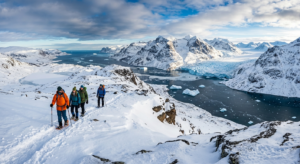
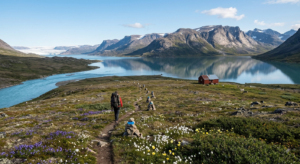
There is also something deeply visual about the Arctic. Snowfields can stretch beyond the horizon. Mountains can rise beside frozen water. Icebergs can appear almost blue. The northern sky can glow with auroras.
The aurora is especially famous.
When charged particles from the Sun interact with Earth’s upper atmosphere, glowing colors can appear in the night sky. Green is common, but other colors can also occur under the right conditions.
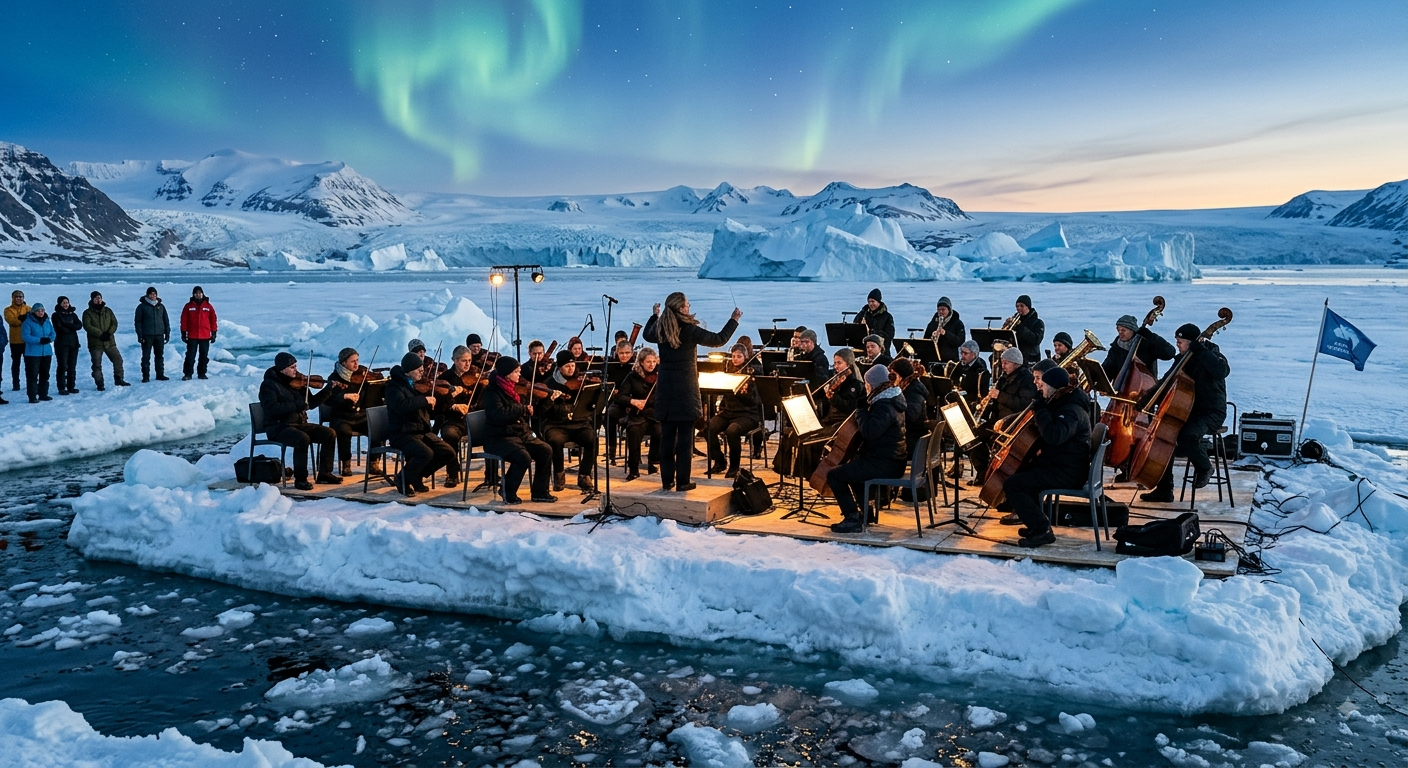
If someone ever creates a true “Arctic Circle Symphony,” I suspect the aurora would become its grand finale.
But the real finale should probably be quieter.
A single sound.
A long breath.
Then silence.
Because the Arctic does not need exaggeration.
Its reality is already extraordinary.
So, as of Sunday, August 16, 2026, there is no reliable evidence I could verify for a major breaking-news story specifically titled “Arctic Circle Symphony.” The exact phrase appears to be associated online with a Symphony Duet portable cooler rather than a confirmed musical event.
The genuine Arctic update is much broader.
The far north remains a rapidly changing region. Sea ice, wildlife, weather, communities and human activity are all part of the story. Scientists continue to watch it closely because what happens there can influence the wider planet.
And maybe that is the real Arctic Circle symphony.
It is the sound of a changing planet.
I would listen closely.
✍️ Written by Vimal Bhagat
🌎 Sharing fresh news, trending stories & interesting updates from around the world.
💙 Read more: arcticcircle.us