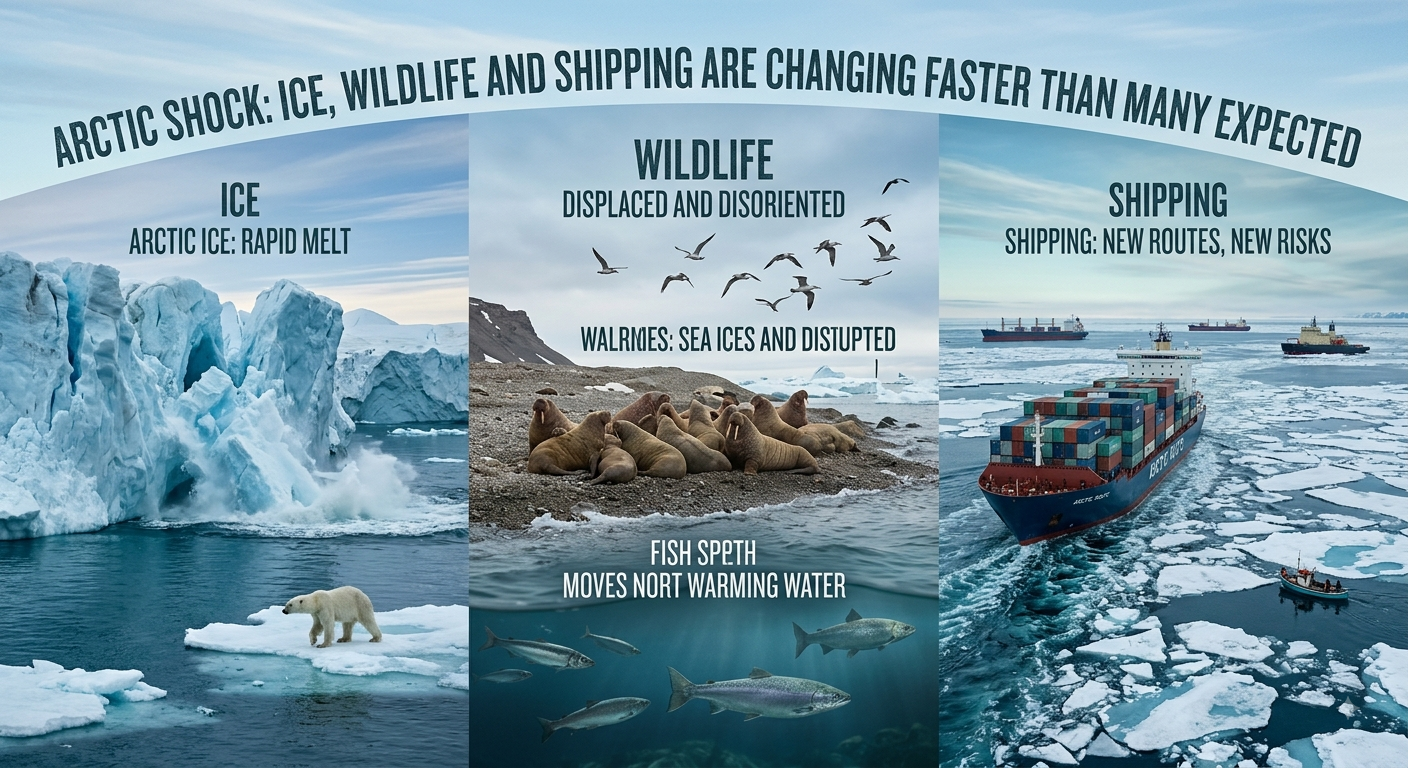
Arctic conditions are making fresh news on Sunday, August 16, 2026, and the far north has plenty to talk about. I am watching this frozen world, and the latest updates feels bigger than a normal summer story. Sea ice is still shrinking, ships are moving through northern waters, and scientists are seeing changes that can affect wildlife and people far away.
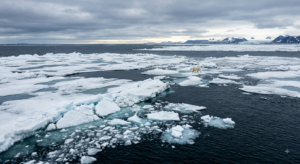
The Arctic is not one quiet white place anymore. It is changing, very fast. In early August, Arctic sea ice stood at about 7.02 million square kilometres. That was the ninth-lowest level for that time of year in the satellite record, and it was about 1.38 million square kilometres below the 1981–2010 average. I looked at that number twice, because it is really huge.
And then comes the strange part. The ice can look strong from far away, but its story is not so simple. Summer melting is still going on. September is usually when the Arctic reaches its yearly minimum, so scientists are watching the next few weeks closely. Nobody can yet say exactly where this year’s minimum will land. That little uncertainty is making the Arctic story even more interesting.
I think the ice is the biggest gossip in this whole story. When bright ice disappears, darker ocean water can absorb more heat. Then the ocean warms more. It can make the next round of ice growth harder too.
Scientists have been watching this cycle for decades. The Arctic is warming faster than the planet as a whole, according to the National Snow and Ice Data Center. Sea ice loss is not only a polar problem. It can influence climate, ocean circulation, weather patterns and ecosystems. So yes, a change in a place that seems very far away can still become everybody’s problem.
This summer has also brought another surprise. A new scientific expedition is heading into the Central Arctic Ocean. Four researchers from Chalmers University of Technology joined the icebreaker Oden on August 10 for a six-week trip. The team wants to study how the ocean, sea ice and atmosphere interact in a rapidly changing Arctic. More researchers are involved too, including an international group of early-career scientists.
That trip matters because the Arctic is not just about looking at ice from satellites. Scientists need measurements from the water, air and ice itself. They want to know what is happening underneath the surface. They want better answers about why the region is changing and what may happen next. It is a little like checking a house from inside instead of only looking through the window.
Meanwhile, wildlife has its own dramatic story. A recent study in Alaska found that shrinking sea ice is changing how polar bears behave. With less ice available, some bears are spending more time on land. That can bring them closer to seabird nesting areas. Researchers documented polar bears eating seabird eggs on Cooper Island in northern Alaska.
That sounds like a small event, but it is not really small. Food chains are connected. If polar bears change their feeding habits, birds can feel the pressure. If birds lose nesting success, another part of the ecosystem can shift. One animal’s new habit may become another animal’s bad news.
There was also a rather clever wildlife story earlier this summer. An artificial-intelligence radar system called “Bear-dar” detected a polar bear mother and two cubs near a weather station in Canada’s High Arctic. The warning gave staff time to watch the animals and respond safely. The bears were guided away from the station without a dangerous encounter.
I find that part almost funny, but it is serious too. More animals may approach human facilities as their normal habitats change. Better warning systems can protect both people and wildlife. Technology is now becoming part of Arctic safety, which would have sounded like science fiction years ago.
Then there is shipping. This is where the Arctic story becomes much more political and commercial. Less seasonal ice can create new opportunities for ships. Russia is already using the Northern Sea Route more heavily for oil shipments to Asia. Reuters reported that seven shipments carrying roughly six million barrels of crude were already en route in 2026, nearly half the volume transported through the route during the entire 2025 season.
China is also making a bigger move. Sea Legend Shipping has begun a regular seasonal cargo service through Arctic waters. The first reported service is planned between China and the United Kingdom using Russia’s Northern Sea Route. The route can be much shorter than sailing around Africa, although ice, insurance, politics and safety remain major challenges.
That is the part nobody should ignore. The Arctic is becoming more accessible, but accessible does not mean easy. Ice can move. Weather can change. A route that works one week may become difficult later. Ships may still need icebreakers. Insurance can cost more. Environmental accidents could be especially hard to handle in remote waters.
Still, companies are interested. A shorter journey can mean less fuel and less travel time. China has started issuing detailed ice forecasts along parts of the Northern Sea Route. More than 25 Chinese bulk carriers were reported to be scheduled for northern Russian and Baltic ports during the current season.
It is almost a new Arctic race, but not the kind with runners or bicycles. This one is about routes, resources, technology and influence. Countries want access. Businesses want cheaper transport. Scientists want better information. Indigenous communities want their lands and waters protected. Wildlife needs room too. Everybody has a different reason to watch the same frozen ocean.
And now another story is causing a different kind of noise. The United States government has ended federal support for the annual Arctic Report Card, a major assessment that has tracked Arctic environmental changes since 2006. The decision has drawn criticism from scientists who say the report is important for understanding climate trends and planning for the future.
The report has been more than just a yearly paper. It has brought together information about temperatures, sea ice, glaciers, permafrost, ecosystems and other parts of the Arctic system. The 2025 report recorded the warmest Arctic surface temperatures in its record since 1900 and exceptionally low winter sea ice.
For me, that makes the timing especially striking. The Arctic is changing while some of the systems used to explain those changes are also being changed. Scientists say data collection itself will continue, but the loss of federal coordination could make communication and public reporting harder.
There is more ice news from Greenland too. A huge section of ice broke away from Petermann Glacier this month, forming a new floating ice island. Reports described the piece as roughly Manhattan-sized and hundreds of feet thick. Researchers had been watching the glacier for years and had anticipated that a major break could happen.
A calving event like this can look spectacular. The pictures can be beautiful. But behind the beauty is a serious scientific question. Why are glaciers changing? How quickly are they losing ice? What happens when huge pieces enter the ocean? Researchers study these events because Greenland’s ice matters for global sea-level rise.
The Arctic also has another strange feature. It can change slowly and suddenly at the same time. A long trend may take decades. Then one storm, one warm period, one large glacier break or one unusual animal encounter suddenly grabs the news. That is why scientists do not judge the region from one day alone.
The current sea-ice numbers are important, but they are only one piece of a much larger picture. The Met Office says July Arctic weather remained stormy and cyclonic, while temperatures were more widely above average than in June. Sea ice was especially low in parts of the Kara Sea and several other marginal seas.
So what happens next? The simple answer is, nobody knows every detail. Scientists will watch the ice through late summer. Ships will continue testing northern routes. Wildlife researchers will keep tracking animals. Satellites will scan the ice and glaciers. Expeditions will collect measurements from places that are still difficult to reach.
The bigger answer is more uncomfortable. The Arctic is becoming a place of climate change, business, science, wildlife pressure and geopolitical competition all at once. It is no longer possible to look at the region only as a distant frozen wilderness.
I keep coming back to one simple thought. The Arctic looks like the end of the map, but its changes do not stay there. Ice loss can affect oceans. Ocean changes can affect climate. Climate changes can affect animals. New routes can affect trade. Trade can affect politics. And politics can affect the research needed to understand everything.
That is why the latest Arctic news feels bigger than one melting season. The ice is moving. Ships are coming. Animals are adapting. Scientists are measuring. Governments are making choices. And the world is watching this strange northern story unfold, one cold day at a time.
✍️ Written by Vimal Bhagat
🌎 Sharing fresh news, trending stories & interesting updates from around the world.
💙 Read more: arcticcircle.us