Life in the Arctic Circle looks calm from far away. But on Sunday, August 16, 2026, people living across the far north are still facing a world where cold, distance, changing ice, and long dark seasons shape almost every part of the day. Recent reporting from Arctic communities shows that daily life can be both modern and deeply connected to the land.
I often imagine the Arctic as one giant sheet of white. It is not. There are towns, homes, schools, shops, roads, airports, boats, clinics and busy family lives. Some places are small. Others are large northern cities. Murmansk, Tromsø, Norilsk and other communities show that people can build permanent lives far above the usual line of cold.
The first surprise is simple. People do not spend every day sitting inside a warm house. Kids play. Life moves on, even when the weather says no.
Winter, however, changes the rules.
In many Arctic places, winter can bring extreme cold and very little daylight. A short walk outside may need careful planning. Warm coats are not just fashion there. They can be part of staying safe. Gloves matter. Boots matter. A small mistake in severe weather can become a serious problem very quickly.
I think that is one of the biggest differences. In a warmer city, you may step outside without thinking. In the Arctic, the weather can make you think first.
Homes also have a special role. A warm house becomes a place for family, food, rest and work. Heating is important. Good insulation is important too. Windows, doors and pipes all have to deal with the cold. When temperatures fall far below freezing, ordinary things can become difficult.
Even starting a car may require planning.
Transportation is another big part of Arctic life. Some communities are connected by roads. Others depend heavily on aircraft, boats, snowmobiles or other forms of transport. Distance is not just a number on a map. It can affect the price of food, access to services and how quickly help can arrive.
A remote town may have only a small airport. Yet that airport can be a lifeline.
Food is another story. Arctic communities often have supermarkets and modern food systems, but bringing supplies to remote areas can cost more. Fresh food may travel long distances. Weather can delay deliveries. A storm is not only a weather event when a community depends on a plane or boat for supplies.
Then there is traditional food.
For many Indigenous communities, hunting, fishing and gathering are more than ways to get something to eat. They can connect families with culture, knowledge and place. But the natural environment is changing, and that can make traditional activities harder or less predictable. Recent research and reporting have highlighted how climate change is affecting Arctic communities and their relationships with the land.
I find this part especially interesting. Modern technology and old knowledge can exist side by side.
A person may use a smartphone in the morning and traditional knowledge of weather, ice or animals later the same day. A snowmobile can replace some older forms of travel, but knowledge about safe routes can still be passed through families.
The Arctic is not frozen in time.
Schools operate there. Teachers work there. Children grow up there. Some young people dream about leaving. Others want to stay. Some return after studying somewhere else. The future of a small Arctic town can depend heavily on whether young people see a reason to build their lives there.
Healthcare can be another challenge. Large northern cities may have hospitals and many services. Small communities can have fewer options. Serious medical cases may require transportation to a larger center.
That makes distance feel very real.
Internet access has also changed northern life. A person living in a remote community can now communicate with someone thousands of kilometers away. Online learning, digital work, video calls and social media can connect Arctic residents with the wider world.
Still, the internet does not erase isolation.
A person can be connected online and still live in a place where the next large town is very far away. Weather can close roads or stop flights. A storm can make a quiet community feel even smaller.
And then comes the strange light.
In summer, some Arctic locations experience very long periods of daylight. The famous midnight sun can make the clock feel almost meaningless. People may go outside late at night and find the sky still bright.
I imagine a child looking through a window at midnight and asking, “Why is the sun still there?”
In winter, the opposite can happen. Long periods of darkness can change sleep, mood and daily routines. Artificial lights become more important. Families create their own rhythm when nature stops following the usual day-and-night pattern.
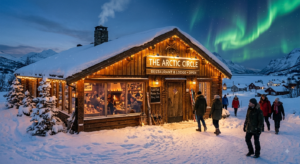
The Arctic night is not always completely black, either. Moonlight, snow and northern lights can create a strange glow across the landscape.
Auroras are one of the region’s most famous natural sights. Green, purple and other colors can appear across the sky when conditions are right. For visitors, it may feel magical. For residents, it can be a normal part of the northern sky, though still beautiful.
Wildlife is another major part of the story.
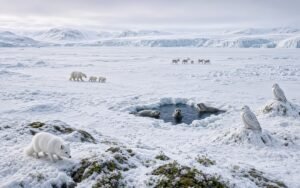
Polar bears, Arctic foxes, reindeer or caribou, seals, whales and many birds live across different parts of the Arctic. Their presence affects people in different ways. Some animals are important for food and culture. Others can be dangerous.
A polar bear near a settlement is not simply a tourist attraction.
It can become a safety concern.
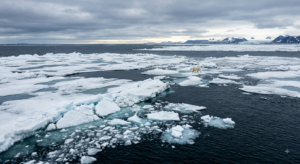
Arctic residents often understand the land in ways that visitors may not. They know that a frozen surface is not automatically safe. Ice can look strong and still be dangerous. Weather can shift quickly. A route that worked last year may not work this year.
That knowledge is becoming even more important as the climate changes.
The Arctic is warming rapidly, and recent reporting has again focused attention on changes in sea ice, permafrost, rivers, wildlife and infrastructure. A recent report also highlighted concern about the future of long-running Arctic climate monitoring in the United States.
Permafrost is a major issue.
It is ground that stays frozen for long periods. Buildings, roads and other structures in northern communities can depend on stable frozen ground. When that ground thaws, the land can shift.
One recent report described problems in Point Lay, Alaska, where thawing ice-rich ground is contributing to sinking and damage. The change is not just about temperature. It can affect homes, roads and the safety of a whole community.
That is where the Arctic story gets serious.
Climate change is not only about melting ice far away from people. It can reach the front door.
A changing coastline can affect a village. A changing river can affect fishing. Changing sea ice can affect travel. Changing animal patterns can affect hunting. Thawing ground can affect buildings.
The old calendar may not always match the new conditions.
For Indigenous people, these changes can also touch culture. Knowledge passed from one generation to another often depends on observing animals, weather, ice and seasons. When those patterns change, the knowledge itself has to adapt.
Yet Arctic communities are not helpless.
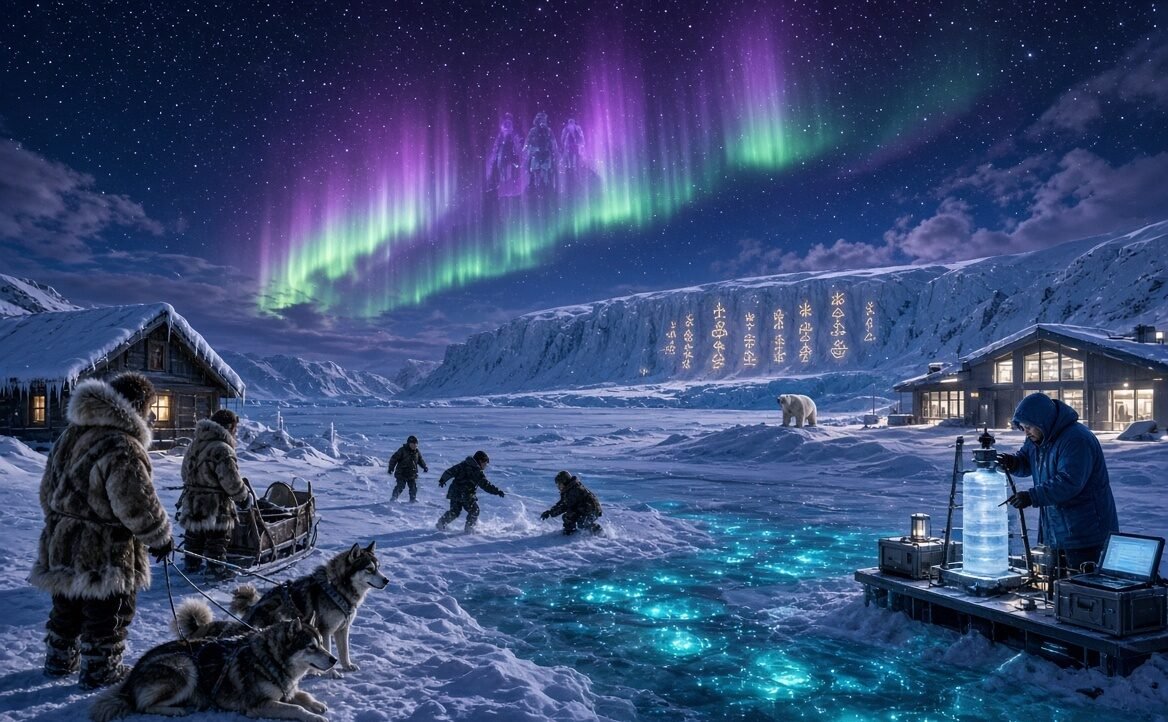
People are finding new ways to adapt. Scientists work with local communities. Indigenous knowledge is increasingly recognized as valuable for understanding environmental change. Research published in 2026 has emphasized the importance of care, community relationships and local voices when studying Arctic change.
There is also a strong sense of community in many northern settlements.
When a place is small, people may know each other well. A neighbor can become more than someone living next door. They can be the person who helps during a storm, shares equipment, checks on an older resident or gives advice about local conditions.
That kind of cooperation matters.
Life in the Arctic Circle can look lonely from a photograph. But photographs do not show everything.
And they certainly do not show the small jokes, arguments, birthdays and ordinary moments that make a place feel like home.
The Arctic has cities too. Tromsø in Norway is a good example of northern urban life, while other settlements are much smaller and more isolated. Across the wider Arctic, communities range from major towns to tiny villages where only a few thousand or even fewer people live.
So the idea that everyone in the Arctic lives in an igloo is far from reality.
Modern Arctic homes can look much like homes elsewhere. People use heating systems, computers, televisions, refrigerators and phones.
But the environment is always present.
That is what makes Arctic life different.
I think the most fascinating part is the balance. People live with modern technology, but nature still has a huge voice. A storm can change plans. Ice can decide a route. Darkness can shape a schedule. A warmer winter can create a new problem.
And sometimes, the biggest news is not a dramatic event.
It is a small change.
A river freezes later.
A trail becomes unsafe.
An animal arrives at a different time.
The ground becomes softer.
A flight is delayed.
A family changes its routine.
These small things can reveal a much bigger story.
Life in the Arctic Circle is therefore not just a story about cold weather.
As of August 16, 2026, that story is changing quickly. Reports from across the Arctic continue to show communities dealing with environmental change while maintaining everyday life.
The Arctic may look like the edge of the world.
For the people who live there, it is not the edge.
It is home.
And behind the snow, ice and long northern nights, ordinary life keeps moving.
That may be the biggest Arctic surprise of all.
✍️ Written by Vimal Bhagat
🌎 Sharing fresh news, trending stories & interesting updates from around the world.
💙 Read more: arcticcircle.us