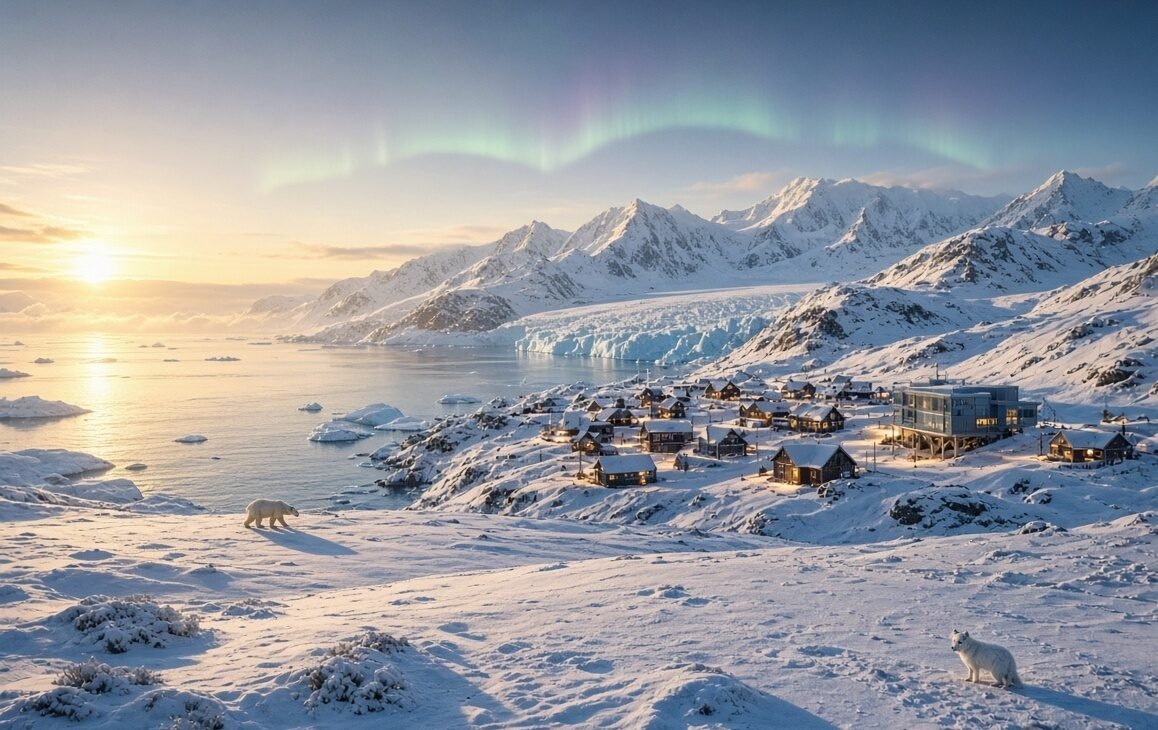
On Monday, August 17, 2026, life in the Arctic Circle is showing a side of the far north that many people never see. I often imagine the Arctic as only ice, snow, and lonely mountains. But real life there is much more. Almost four million people live across the Arctic region, including Indigenous Peoples, hunters, herders, workers, and people living in busy northern towns.
I would wake up there and the first thing I might notice is the light. Or maybe there is almost no light. It sounds strange, but the Arctic can change the meaning of day and night. In summer, places above the Arctic Circle can have the midnight sun. The sun stays visible for a very long time, and sometimes it does not set at all. In winter, the opposite can happen. The sun can remain below the horizon for more than a day, creating the famous polar night.
I think that would feel like living inside a different clock. At midnight, I could still see sunlight. I might look outside and think it is afternoon, even when everyone says it is bedtime. Children still go to school. Workers still go to work. Families still cook dinner. Life does not stop just because the sky is acting unusual.
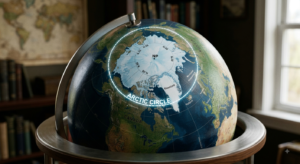
The Arctic is not one single place. It covers huge areas of Canada, Greenland, Alaska, Russia, Norway, Sweden, Finland and Iceland. Every community has its own way of living. Some places are tiny villages. Others are larger towns with schools, stores, airports, hospitals and modern homes. The Arctic has both old traditions and new technology living side by side.
I might expect everyone there to live in an igloo. That idea is mostly wrong. Modern Arctic communities have ordinary houses and buildings. Many homes are built to handle freezing weather, strong winds and frozen ground. Heating is very important. A warm house is not just comfortable there. It can be a basic need.
Outside, however, the cold can become serious very quickly. I would need thick clothes, strong boots, gloves and a good hat. Exposed skin can become dangerous in severe cold. People who grow up there learn how to respect the weather. You do not simply walk outside without thinking. The sky, wind and temperature can change your plans.
Transportation is another big part of Arctic life. Roads do not connect every community. In some places, people use airplanes, boats, snowmobiles or other vehicles to move around. During winter, snow and ice can become part of the normal travel system. It is not an adventure for everyone. For local people, it can simply be how you get food, visit family or reach another village.
I find this part of Arctic life fascinating. Imagine needing to plan a trip around weather, ice and distance. A journey that looks short on a map may be difficult in real life. The Arctic is huge, and settlements can be very far apart.
Food also tells an important story. Stores bring modern foods into many communities, but traditional foods remain important in many Indigenous communities. Hunting, fishing, herding and gathering have supported Arctic peoples for generations. These activities are not only about eating. They can also carry knowledge, culture, family history and identity.
I would probably be surprised by how much knowledge is needed to live from the land. A person must understand animals, seasons, snow, water and weather. Older people can pass this knowledge to younger generations. A frozen landscape may look empty to an outsider. To someone who knows it well, it can tell many stories.
Reindeer herding is important in parts of northern Scandinavia and Russia. Fishing is important in many coastal communities. Hunting remains significant for some Indigenous peoples. Each region has its own traditions. There is no single “Arctic lifestyle,” and that is one thing I would not want to forget.
Modern life is there too. People use smartphones. They watch movies. They use computers. Children study science and mathematics. Adults work in offices, schools, shops, mines, transport services and government. Researchers also travel north to study the atmosphere, ocean, wildlife and climate.
Then there is the internet, which has changed isolation in many places. I can imagine someone sitting inside a warm home north of the Arctic Circle and talking online with a friend thousands of miles away. Outside, the landscape may look almost untouched. Inside, the world can feel surprisingly connected.
But the Arctic is changing, and people living there are seeing those changes close up. The Arctic Council says temperatures in the region are rising at about three times the global annual average.
That number sounds distant until you think about daily life. A warmer Arctic can affect sea ice, wildlife, travel routes, buildings and traditional activities. Permafrost is especially important. When frozen ground thaws, land can become unstable. Roads and buildings may face new problems.
A recent report from Alaska showed just how serious this can become. The remote community of Point Lay has been experiencing ground subsidence as ice-rich permafrost thaws. The changing ground can damage infrastructure, while old organic material in the soil can release carbon dioxide and methane as it decomposes.
I think this is where the Arctic story becomes much bigger than snow. It becomes a human story. People are not simply watching climate change from far away. Some communities are dealing with its effects where they live.
Wildlife is also deeply connected to everyday life. The Arctic is home to polar bears, seals, walruses, Arctic foxes, caribou, reindeer, whales, seabirds and many other animals. More than 21,000 known species live in Arctic environments, according to the Arctic Council.
I would probably feel very small standing near an Arctic animal. A polar bear can look beautiful from a safe distance. But people living in polar bear country know the animal is powerful and dangerous. Communities develop ways to reduce encounters and keep people safe.
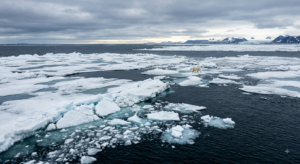
The Arctic can also be incredibly beautiful. Snow-covered hills can stretch toward the horizon. Ice can glow blue. The ocean can look dark and endless. Then the sky may suddenly become green, purple or red during an aurora.
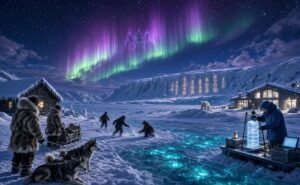
The northern lights are one reason many visitors dream about the Arctic. But for people who live there, the sky is not just a tourist attraction. It is part of home. Sometimes it is spectacular. Sometimes the weather is cloudy and nothing happens at all.
Summer brings another strange experience. Above the Arctic Circle, the midnight sun can make nighttime feel like daytime. Northern Norway, for example, can experience weeks of midnight sun. In Svalbard, the period of continuous daylight can last for several months.
I can almost imagine opening the curtains at midnight and finding a bright sky. I might laugh at first. Then I would probably struggle to sleep. Curtains, eye masks and regular routines become useful when sunlight refuses to leave.
Winter brings the reverse. The polar night can create long periods without direct sunrise. It does not always mean total darkness all day. Twilight can still brighten the sky in some places. Still, the lack of normal daylight can make winter feel very different.
For me, this is perhaps the most surprising part of life in the Arctic Circle. People are not frozen into a permanent survival story.
The Arctic is also home to many Indigenous cultures. More than 40 distinct Indigenous groups are represented across the circumpolar north, with different languages, histories and traditions. Their cultures are not simply old stories from the past. They are living cultures, changing and adapting in the modern world.
I would want to listen before making assumptions. An Arctic community is not a museum. People there are building futures while also protecting traditions. Language, food, clothing, hunting skills, stories and knowledge can all be part of that work.
There are difficult issues too. Some remote communities face high costs, limited services, housing pressures and transportation challenges. Climate change adds another layer. The same environment that supports traditional life is changing quickly.
Still, there is strength in these communities. People cooperate because distance can make cooperation necessary. A neighbor may matter a lot when the nearest large town is far away. Family and community can become especially important during difficult seasons.
I imagine winter evenings being quiet. Outside, the wind moves across the snow. Inside, lights shine from houses. Someone cooks food. A child plays. A worker checks tomorrow’s weather. Another person looks out the window, hoping to see the northern lights.
That picture feels very different from the stereotype of an empty Arctic.
The Arctic Circle is not simply a line on a map. It is part of a living world. People have built communities there for generations, and modern residents continue to create ordinary lives in an extraordinary environment. The cold is real. The darkness is real. The beauty is real too.
And maybe that is the biggest surprise of all.
If I ever visited, I would probably arrive expecting to see a frozen wilderness. Instead, I would find homes, schools, roads, workplaces, traditions, laughter and people trying to live well in a place where nature still sets the rules.
The Arctic can look far away from the rest of the world. But the people who live there are not far away from life. They are living it every day, under a sun that sometimes refuses to set and a winter sky that sometimes refuses to brighten.
✍️ Written by Vimal Bhagat
🌎 Sharing fresh news, trending stories & interesting updates from around the world.
💙 Read more: arcticcircle.us