Does it snow in the Arctic? Yes, it does, and the answer may be more surprising than many people think. On Monday, August 17, 2026, the frozen north remains a place where snow can fall even during summer, although the amount and timing changes from one Arctic region to another.
I used to think the Arctic must get huge snowstorms all the time. It sounds right, because the place is famous for ice, cold winds, and white ground. But the real story is different. Much of the Arctic is actually very dry. Some areas receive so little precipitation that scientists describe them as polar deserts.
So yes, snow falls in the Arctic. But it does not always fall in the big, dramatic way people imagine. Then suddenly, a quiet snowy place can look wild.
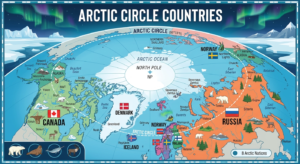
The Arctic is a huge region. It includes the Arctic Ocean and northern parts of countries such as Canada, Russia, Greenland, Norway and the United States. Weather is not the same everywhere. One part can be very dry, while another part receives much more moisture from nearby oceans and storms.
Snow is especially common during the cold season. When temperatures stay below freezing, water in the atmosphere can form ice crystals. Those crystals join together and fall toward the ground as snow. In the central Arctic, almost all precipitation in winter falls as snow. That makes winter snow a normal part of Arctic life.
But here comes the strange part. The Arctic can be extremely cold and still have surprisingly little snow. Cold air cannot hold as much water vapor as warm air. The Arctic also has large areas covered by sea ice, which limits evaporation. With less moisture available, there can be fewer clouds and less precipitation.
This is why calling the Arctic simply a snowy place can be misleading. Snow is common, but heavy snowfall is not everywhere. The Canadian Arctic Archipelago and central Arctic Ocean are among the drier areas. NOAA says much of this region can have polar-desert conditions, with annual precipitation around 250 millimeters or less.
I find that part almost unbelievable. A desert usually makes people think of hot sand. The Arctic gives the word a totally different look. It can be a cold desert, with snow and ice instead of dunes and burning sunlight.
The Atlantic side of the Arctic tells another story. Areas closer to Greenland, Scandinavia and the North Atlantic can receive much more moisture. Storms move in from the ocean and carry wet air toward the north. When that moisture meets cold Arctic air, snow can fall. In some locations, mountains can force moist air upward and increase precipitation even more.
That means one Arctic location may be covered in fresh snow while another place is dry and windy. Same Arctic, very different weather. It is one reason scientists study the region as many connected climate zones instead of one simple frozen place.
Winter is not the only time snow appears there. Snow can fall during summer too. The National Snow and Ice Data Center notes that more than half of precipitation events at the North Pole during summer are snowfall. That sounds strange because summer normally makes people think about rain, sunshine and melting snow. At the North Pole, though, temperatures can remain low enough for snow to continue.
Still, summer snow does not mean every Arctic location stays white all year. The Atlantic sector is warmer, and summer snowfall there is uncommon. In other Arctic areas, rain can occur when temperatures rise. The difference can happen over surprisingly small distances.
The North Pole itself is also unusual. It sits on floating sea ice, not on a continent. Snow falls onto that ice and can remain for long periods when temperatures stay cold. Winds then move the snow around. Snow can pile up in some places and become thin in others.
I imagine the scene as almost silent, but it is not always peaceful. Arctic winds can be powerful. They can blow loose snow across the surface and create drifting snow. A person looking at the ground may see a smooth white field, but underneath there can be layers built during many different weather events.
Snow is more than decoration in the Arctic. That reflective quality is called albedo, and it helps keep snow-covered surfaces cooler.
This creates an important connection between snow and the wider Arctic climate. When snow disappears earlier, darker ground or water can absorb more sunlight. That extra absorbed energy can contribute to warming and further melting. Scientists therefore watch changes in snow cover closely.
Recent research also shows that the balance between snow and rain is changing in parts of the Arctic. The National Snow and Ice Data Center reports that some of the largest transitions from snow to rain have occurred during summer over Arctic land, with Greenland being a major exception. Rain-on-snow events can also create difficult conditions for animals and people.
Imagine rain falling onto old snow. The water can freeze later and create a hard ice layer. For Arctic animals, that can become a serious problem. Reindeer and other grazing animals may have difficulty reaching food beneath an ice crust. For people, icy surfaces can also make travel harder.
There is another twist in the story. Arctic precipitation has been increasing over the long term. NOAA’s 2025 Arctic Report Card says precipitation for the Arctic region during the 2024–25 water year was at a record high, while winter, spring and autumn precipitation were each among the five highest in the record.
That does not mean every Arctic place suddenly gets more snow. The precipitation can arrive as rain instead, especially during warmer periods. The Arctic climate is complicated, and temperature determines whether falling water reaches the surface as snow or rain.
A warmer atmosphere can hold more moisture. More open water can also provide a source of evaporation. As sea ice decreases, areas of open ocean can release more moisture into the atmosphere. That moisture can later fall as precipitation. But what type of precipitation arrives depends on temperatures and weather conditions.
The Arctic is therefore not simply becoming a wetter snowy wonderland. Some places may receive more precipitation while also experiencing more rain. Some winters may have heavier snow events. Other periods can remain unusually dry.
A 2025 scientific analysis found that, north of 70 degrees latitude, about 70 percent of annual precipitation falls as snow on average, while the rest is rain. It also found strong seasonal differences, with precipitation patterns changing during the year.
That number makes the answer very clear. Snow is still a major part of the Arctic water cycle. But it shares the stage with rain, especially in the warmer seasons and regions.
I think the biggest surprise is that the coldest place is not automatically the snowiest place. Snow needs moisture too. Without enough moisture in the air, even extremely cold areas may receive very little new snow.
This is why some Arctic landscapes can look almost bare despite being surrounded by ice. The air is cold, dry and often very stable. Clouds may be limited. Precipitation can be small. Yet old snow can remain for a long time because there is not enough warmth to melt it quickly.
That creates a funny weather story. A place can receive little snow but still look snowy for months. The snow that arrives simply stays there. In warmer regions, a large snowfall might disappear after a few days. In the Arctic, a smaller amount can survive much longer.
The Greenland Ice Sheet is another special case. High parts of the ice sheet remain cold enough for precipitation to fall mainly as snow. Rain is much less common there than in many other Arctic locations. Recent research has nevertheless found that rain events over Greenland have increased in recent years.
Snow also helps scientists understand Arctic change. They measure snow depth, snow cover, snowfall and the timing of melting. These observations tell researchers how the climate is shifting.
The timing matters a lot. If snow melts earlier in spring, dark surfaces are exposed sooner. Those darker surfaces absorb more solar energy than bright snow. That can encourage additional warming. It is a small-looking change with a very large climate connection.
So, does it snow in the Arctic? Absolutely. Snow falls across much of the region, especially during winter, and it can even fall at the North Pole during summer. But the Arctic is not equally snowy everywhere. Some places are surprisingly dry, while areas influenced by Atlantic storms can receive much more precipitation.
The real Arctic story is therefore more interesting than a simple picture of endless snow. It is a place where cold air, ocean moisture, storms, sea ice and changing temperatures all meet.
And that may be the biggest surprise of all. The Arctic can be frozen without being snowy every day. Snow comes, snow stays, snow moves, and in some places snow slowly disappears. Above everything, the Arctic keeps changing, making every season a little different from the one before.
✍️ Written by Vimal Bhagat
🌎 Sharing fresh news, trending stories & interesting updates from around the world.
💙 Read more: arcticcircle.us