
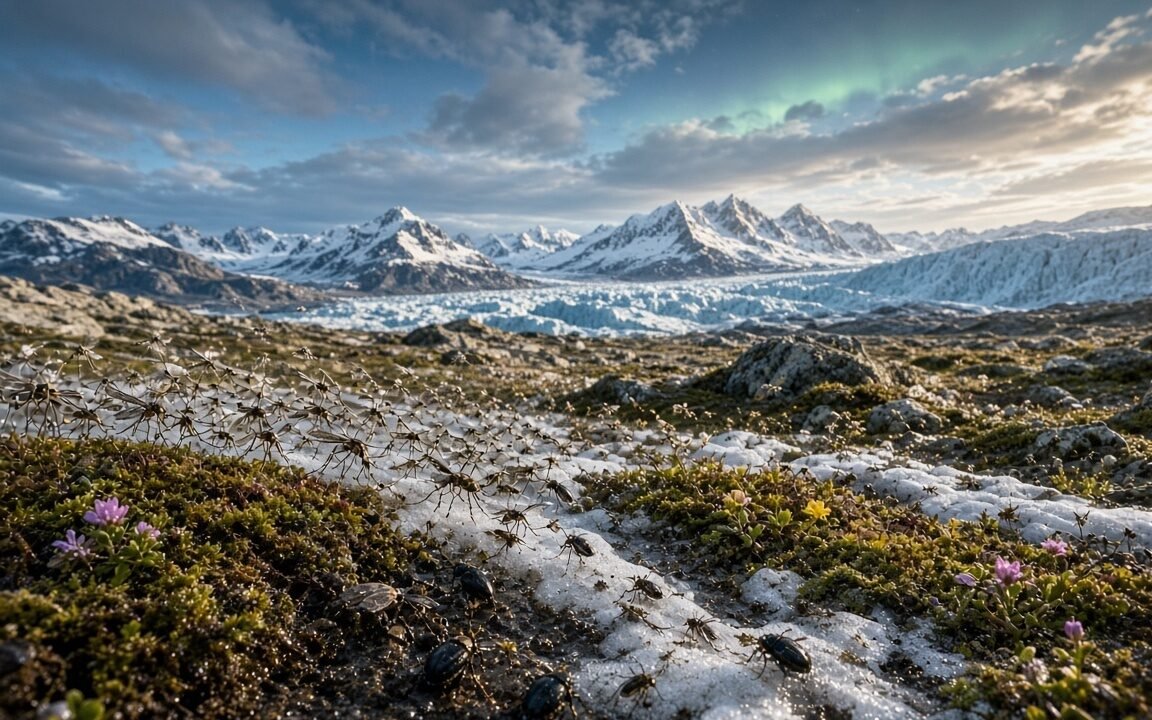
August 21, 2026 — I thought the Arctic was mostly ice, snow, wind, and big animals. But insects in the Arctic are telling a much more surprising story, and some of them are becoming harder to ignore. I looked into the latest reports, and the tiny buzzing world up there is far more busy than it first seems. (WWF Arctic)
When I picture the far north, I imagine a white land with almost nothing moving. Then summer arrives, and suddenly the tundra can sound alive with wings, flies, mosquitoes, beetles, moths, and other tiny creatures. It is a short summer, yes, but insects use almost every warm day they get.
Mosquitoes are perhaps the most famous Arctic insect. I know that sounds funny because nobody really wants a mosquito party, but these insects have a real place in the northern food web. They feed birds, fish, spiders, and other animals, while some mosquitoes and flies also visit flowers and help move pollen. (NOAA Arctic)
The Arctic mosquito story became even more interesting recently. Iceland, long known as one of the few places in the Arctic without established mosquitoes, recorded its first documented mosquitoes after specimens were found near Reykjavík in 2025. Scientists confirmed the insects, and the discovery has been described as another sign of an Arctic environment that is changing. (Phys.org)
I find that part almost unbelievable. An island that had stayed free of mosquitoes for so long suddenly had them. The insects were identified as Culiseta annulata, and scientists have considered whether the insects may be able to survive through winter in the changing climate. (Phys.org)
But mosquitoes are not the whole story. The Arctic has many other insects that quietly work in the background. Flies, bees, butterflies, moths, beetles, wasps, and tiny soil insects can all become part of the short northern summer.
Some Arctic insects have developed clever ways to handle the cold. They can spend long periods in frozen or very cold conditions, often as eggs, larvae, pupae, or adults hidden close to the ground. When summer gives them a small window of warmth, their lives suddenly speed up.
I was surprised to learn how important flies can be. In some Arctic areas, small-bodied flies are major pollinators, and researchers have even observed mosquitoes visiting flowers. That means an insect that people usually think about only because of bites can also have a useful job in the ecosystem. (McGill Reporter)
The flowers themselves are part of this strange northern race. Arctic plants have only a short period to grow, bloom, produce seeds, and prepare for another winter. Pollinating insects have to arrive at almost the right time, or the whole process can become harder.
This is why scientists say Arctic pollinators deserve more attention. NOAA reports that pollinating insects are critical to Arctic ecosystems, but knowledge about many Arctic pollinator species is still limited because long-term monitoring sites are few and research is difficult across such a huge region. (NOAA Arctic)
And then there is the insect everyone notices. The mosquito.
In parts of the Arctic, mosquito numbers can become enormous during summer. I would probably run away from the swarm, honestly. Yet for birds and other insect-eating animals, those clouds of insects can become a seasonal source of food.
Mosquito larvae also live in water. Small ponds, pools, and wet tundra can become breeding places when temperatures rise. Research in Greenland has found that female Arctic mosquitoes carrying eggs were especially common near ponds and areas visited by animals such as caribou, birds, and Arctic hares. (Medical Xpress)
The warmer Arctic is now raising a bigger question. What happens when insects get a longer summer?
Older research has already shown why scientists are watching this closely. Dartmouth researchers reported that warming temperatures can cause Arctic mosquitoes to develop faster and emerge earlier, potentially increasing their abundance. (dickey.dartmouth.edu)
That does not mean every warm year will produce more insects everywhere. The Arctic is complicated. Water, wind, plants, snow cover, predators, and the timing of the seasons can all change insect numbers.
This year shows that complexity too. Recent reporting from Canada’s Northwest Territories noted that several years of hot weather and drought had temporarily reduced some mosquito numbers because the insects need water for breeding. But changing water conditions can bring populations back again. (Cabin Radio)
So the story is not simply “more heat equals more bugs.” It is stranger than that. Some insects may benefit, some may lose suitable habitat, and others could move into places where they were once unable to survive.
I think that is where the Arctic insect story becomes really important. A tiny insect can react quickly to weather changes. If its timing changes, animals that eat it can react too.
Caribou are a good example. Mosquitoes and other biting insects can harass caribou during the short summer. When insect pressure becomes intense, caribou may move toward cooler and windier places to escape the insects. That can mean less time spent eating good food. (WWF Arctic)
Researchers studying the Central Arctic caribou herd found that intense mosquito harassment could reduce the animals’ use of high-quality plants. The herd shifted its movements toward areas where wind and cooler conditions offered some relief from insects. (WWF Arctic)
That sounds like a small problem at first. A mosquito is tiny, and a caribou is huge. But nature does not always work by size. A very small creature can change the behavior of a very large animal when thousands of them arrive together.
Birds also join this strange summer story. Many northern birds arrive during the warmer months when insects become available. For young birds especially, insects can provide valuable food during a short period when they must grow quickly.
Spiders are waiting too. Beetles and other predators are hunting. Fish can eat insect larvae. Even plants depend on insects in ways that are easy to miss.
Then winter returns.
The insects do not simply disappear like a light switched off. Many have special survival tricks. Some freeze in protected places, while others use chemical changes in their bodies to reduce damage from extreme cold. Their life cycle is built around surviving the impossible-looking Arctic winter.
One remarkable example comes from Arctic moths. Some species have larvae capable of surviving extremely low temperatures, showing just how far insect life can be pushed by the cold. The Arctic is not empty, it is full of creatures that learned different rules.
Climate change could now rewrite some of those rules.
Scientists are watching changes in temperature, snow, vegetation, water, and insect timing. A warmer spring can wake insects earlier. An earlier insect season can change when birds find food. More summer warmth can also affect mosquitoes and other biting insects.
There is another twist. Warmer conditions do not always help insects because extreme heat and drought can also damage their habitats. Insects need the right combination of temperature, moisture, food, and shelter. Too much heat can be as troublesome as too little.
That makes Arctic insects useful little warning signs. They respond to the environment quickly, sometimes before larger animals show an obvious change.
I also think the human side should not be forgotten. People living and working in northern communities have their own experience with insects. Mosquitoes can affect outdoor work, travel, hunting, and daily life during the short summer. Recent northern research has been looking at how mosquito activity connects with wildlife, climate, and people’s experiences. (Interreg Aurora)
The Iceland discovery adds another strange chapter. For years, Iceland stood apart from most other Arctic areas because mosquitoes were absent. Their appearance does not prove that climate change alone caused the event, but researchers are studying it as part of a wider ecological shift. (WWF Arctic)
I kept thinking about that while reading the latest reports. A mosquito is so small that you could miss it in a second. Yet finding one in the wrong place can make scientists ask very big questions.
Nobody can answer every question yet. Arctic ecosystems are huge and difficult to monitor, and researchers still lack basic information about many insect species. (NOAA Arctic)
What we do know is that insects are not visitors to the Arctic. They are residents. They pollinate plants, feed birds and fish, recycle nutrients, interact with mammals, and help connect many parts of the tundra food web.
The buzzing sound may be annoying. I would probably complain after five minutes around a giant mosquito swarm. But the science says that buzzing is also part of a much bigger northern story.
The Arctic is changing quickly, and insects are among the creatures responding to those changes. Some are arriving in places where they were not expected. Others are changing their timing or responding to new weather conditions.
So next time I imagine the Arctic, I will not picture only polar bears walking across the ice. I will picture the tiny wings too. Under the midnight sun, between flowers and wet tundra, insects are already writing a very small but very important chapter in the future of the far north. (NOAA Arctic)
✍️ Written by Vimal Bhagat
🌎 Sharing fresh news, trending stories & interesting updates from around the world.
💙 Read more: arcticcircle.us