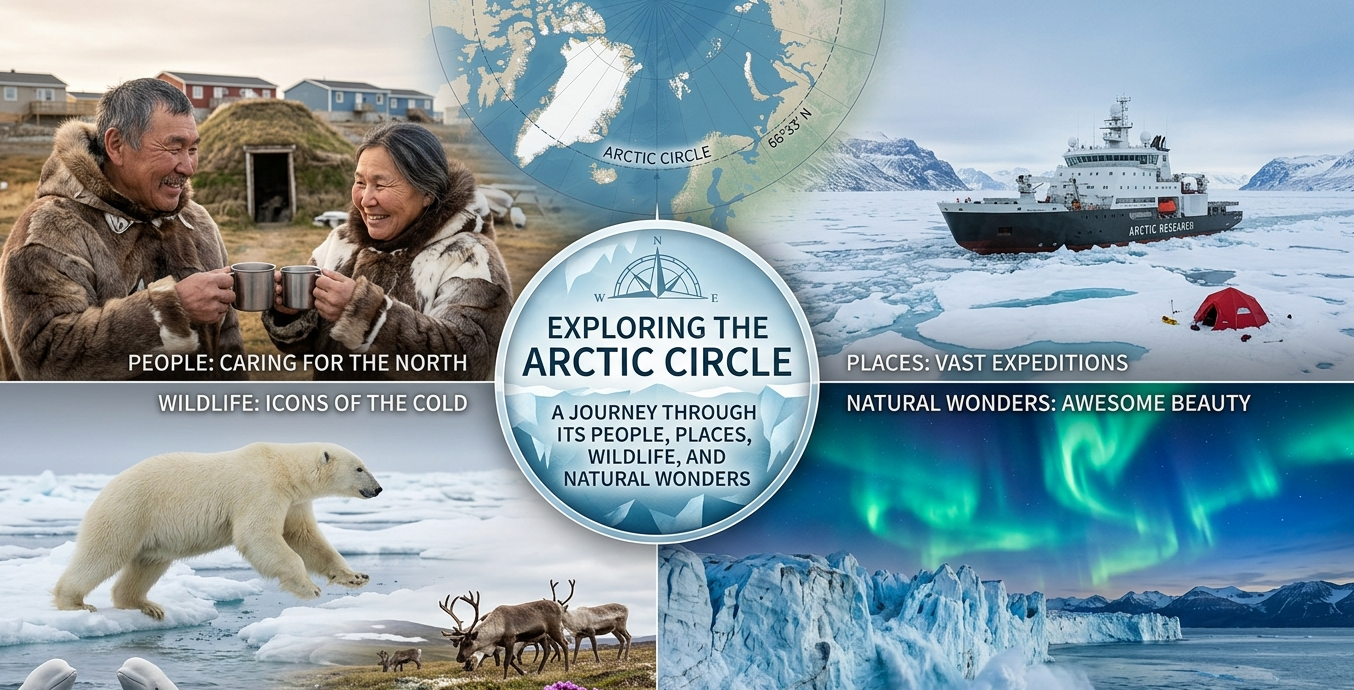
The Arctic Circle is one of the most fascinating regions on Earth. It is a place where extreme weather, beautiful landscapes, unique wildlife, and human communities come together. For many people, the Arctic may seem like a distant world covered in snow and ice, but there is much more to discover beyond its frozen appearance.
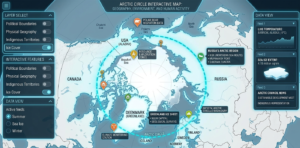
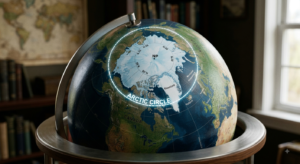
The Arctic Circle is an imaginary line located at approximately 66.5 degrees north latitude. It stretches across parts of several countries and territories, including Norway, Sweden, Finland, Russia, the United States, Canada, Greenland, and Iceland. This geographical line is also connected with one of the most unusual natural experiences on Earth: the midnight sun and polar night.
During the summer months, areas north of the Arctic Circle can experience long periods when the Sun does not completely disappear below the horizon. In winter, the opposite can happen, with darkness lasting for extended periods. These dramatic changes in daylight make life in the Arctic very different from life in most other parts of the world.
For anyone interested in learning more about the region, the Arctic Circle provides a useful starting point for exploring topics related to Arctic geography, nature, travel, climate, wildlife, and northern life.
A Region Full of Natural Wonders
When I think about the Arctic, the first images that come to mind are enormous ice fields, snowy mountains, frozen coastlines, and quiet landscapes. But the Arctic environment is much more diverse than these familiar pictures suggest.
The region includes tundra, mountains, glaciers, islands, forests, wetlands, rivers, and large areas of ocean. Each environment supports different plants and animals.
The Arctic tundra is especially important. It is a cold and mostly treeless landscape where vegetation has adapted to short summers and long winters. Mosses, grasses, lichens, and small flowering plants can survive in conditions that would be difficult for many other species.
The Arctic Ocean also plays a major role in the region’s environment. Seasonal sea ice provides habitat for animals and influences weather and ocean conditions far beyond the Arctic itself.
Climate is another defining part of the Arctic story. Winters can be extremely cold, while summers can bring surprisingly mild temperatures in some locations. Weather conditions vary greatly depending on latitude, altitude, proximity to the ocean, and local geography.
Arctic Wildlife
The wildlife of the Arctic is one of the biggest reasons people are fascinated by the region.
Polar bears are perhaps the most famous Arctic animals. They are closely associated with sea ice and depend on marine ecosystems for much of their food. Their lives are therefore strongly connected to changes in the Arctic environment.
But polar bears are only one part of the story.
Arctic foxes can survive extremely cold conditions with their thick fur and remarkable ability to adapt to changing seasons. Reindeer and caribou are also important Arctic animals, traveling across large areas in search of food.
Seals and walruses live around Arctic waters, while whales travel through northern seas. Birds also arrive in huge numbers during the short Arctic summer, taking advantage of seasonal food supplies.
The relationship between wildlife and climate makes the Arctic particularly important for scientists. Changes in temperature, sea ice, vegetation, and ocean conditions can affect entire food chains.
Travel in the Arctic
Arctic travel has become increasingly interesting to adventurous travelers. People visit northern destinations to see the northern lights, experience the midnight sun, explore snowy landscapes, meet local communities, and observe wildlife.
Northern Norway is famous for dramatic mountains, fjords, coastal landscapes, and opportunities to experience the aurora. Finland and Sweden offer forests, lakes, winter activities, and unique northern experiences.
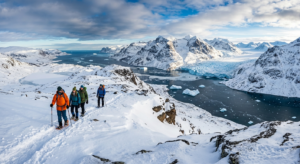
Greenland provides another completely different Arctic landscape. Huge ice-covered areas, remote settlements, glaciers, and coastal scenery make it one of the most unusual destinations in the northern hemisphere.
Alaska and northern Canada also offer opportunities to explore vast wilderness areas. However, traveling in remote Arctic environments requires careful planning because weather, transportation, and distances can be challenging.
A broader guide to the region can be found in this resource covering Arctic Circle travel, places, wildlife, climate, and natural wonders. It brings together several of the main themes that make the Arctic such an interesting destination and geographic region.
The Importance of Arctic Communities
It is easy to imagine the Arctic as an empty wilderness, but that picture is incomplete.
People have lived in northern regions for thousands of years. Indigenous communities have developed detailed knowledge of the land, animals, weather, seasons, and waterways. Their cultures and traditions remain an important part of the Arctic today.
Modern Arctic communities range from small remote settlements to large northern cities. People work in many different fields, including education, tourism, transportation, research, fishing, government, mining, and local businesses.
Understanding the Arctic therefore means understanding both its natural environment and the people who call the region home.
Why Arctic Science Matters
The Arctic has become one of the world’s most important regions for climate and environmental research.
Scientists monitor sea ice, ocean temperatures, glaciers, permafrost, wildlife populations, and atmospheric conditions. The information collected in the Arctic can help researchers understand broader changes happening across the planet.
One reason the region receives so much attention is that Arctic temperatures have changed rapidly compared with many other areas. Scientists are studying how these changes influence sea ice, ecosystems, coastal communities, and global climate systems.
The Arctic is also important for understanding the history of Earth’s climate. Ice cores, sediments, tree growth in suitable northern areas, and other natural records can provide clues about environmental conditions from the distant past.
The Arctic Circle Assembly
The Arctic is not only a subject for scientists and travelers. It is also an important area for international discussion.
Countries, Indigenous organizations, researchers, businesses, environmental groups, and other stakeholders regularly discuss Arctic issues. These discussions can involve climate change, sustainable development, shipping, energy, science, tourism, and community needs.
The Arctic Circle Assembly is another useful topic for readers who want to understand the international side of the Arctic. Forums and assemblies focused on the Arctic create opportunities for people from different backgrounds to discuss challenges and opportunities affecting the region.
Such events demonstrate that Arctic issues are not limited to one country. Decisions made in the north can have wider environmental, economic, and political consequences.
The Northern Lights
One of the most spectacular experiences associated with the Arctic is the aurora borealis, commonly known as the northern lights.
The aurora occurs when charged particles from the Sun interact with Earth’s magnetic field and upper atmosphere. The result can be glowing curtains and bands of light appearing across the night sky.
The colors can vary, although green is one of the most commonly observed. Under suitable conditions, travelers may also see shades of red, purple, or other colors.
Seeing the northern lights requires more than simply traveling north. Cloud cover, darkness, solar activity, and local light pollution all influence visibility.
For travelers, however, the possibility of seeing the aurora remains one of the strongest attractions of the Arctic.
Life Under the Midnight Sun
The Arctic summer can be just as fascinating as its winter.
When the Sun remains above the horizon for long periods, ordinary ideas about day and night begin to change. People can participate in outdoor activities late at night while the landscape is still bright.
This phenomenon is called the midnight sun.
For visitors, it can create an unusual travel experience. Hiking, photography, sightseeing, and other outdoor activities can continue during hours that would normally be dark.
For local residents, however, long summer daylight is simply part of everyday life. People adapt their routines to seasonal changes that are far more extreme than those experienced at lower latitudes.
Winter in the Far North
Winter creates an entirely different Arctic experience.
Snow covers the landscape. Temperatures can fall dramatically. Daylight becomes limited, and some areas experience extended periods without direct sunlight.
Despite these difficult conditions, Arctic communities have developed ways to live and work through the winter. Modern transportation, heating systems, communications, and technology have made life considerably different from the past.
Winter tourism has also grown in several northern destinations. Visitors can enjoy activities such as dog sledding, snowmobiling, skiing, snowshoeing, and aurora watching.
A Changing Arctic
Perhaps the most important Arctic story today is environmental change.
Sea ice naturally grows and shrinks during the year, but long-term observations have shown significant changes in Arctic sea-ice conditions. Scientists continue to study how warming temperatures affect ice, ecosystems, permafrost, and communities.
Melting glaciers and changing sea ice can also influence travel, wildlife, coastlines, and economic activity.
Permafrost is another major concern. Large areas of northern land contain permanently frozen ground. When permafrost warms and thaws, the ground can become unstable and stored carbon can be released.
These changes make the Arctic important not only for people who live there but for people around the world.
Why the Arctic Deserves Attention
The Arctic is sometimes presented as a remote place at the top of the world. But it is connected to many global systems.
The region influences ocean circulation, weather patterns, ecosystems, climate research, shipping, tourism, and international cooperation.
Its wildlife represents some of Earth’s most specialized species. Its landscapes provide extraordinary natural beauty. Its communities preserve cultures and knowledge developed over generations.
At the same time, the region faces serious environmental challenges.
That combination makes the Arctic one of the most important places to understand in the modern world.
For a reader starting from scratch, the best approach is to explore the Arctic from several perspectives. Geography explains where it is. Science explains how its environment works. Wildlife shows how species survive there. Travel reveals its landscapes and communities. Climate research helps explain why its future matters.
The Arctic Circle is therefore much more than an imaginary line on a globe. It is a huge and diverse region filled with life, history, science, culture, and natural beauty.
From the northern lights glowing over a quiet winter landscape to the endless daylight of summer, the Arctic offers experiences that are difficult to find anywhere else on Earth.
And as the region continues to change, learning about it becomes even more important. Maps, research, travel stories, wildlife studies, and international discussions all provide different pieces of the same larger picture.
The more we explore those pieces, the clearer the Arctic becomes—not as a distant frozen edge of the world, but as a living region with a powerful connection to the rest of our planet.
✍️ Written by Vimal Bhagat
🌎 Sharing fresh news, trending stories & interesting updates from around the world.
💙 Read more: arcticcircle.us