Introduction to the Arctic Circle
The Arctic Circle is one of the most remarkable regions on Earth, defined by geography, extreme seasons, frozen landscapes, and an extraordinary variety of life. Located in the Northern Hemisphere, it marks the approximate southern boundary of the area where the sun can remain above the horizon for a full day in summer and below it for a full day in winter.
Stretching across parts of several countries and surrounding the Arctic Ocean, the Arctic region is far more than a land of snow and ice. It contains tundra, glaciers, frozen seas, mountains, wetlands, coastal habitats, and communities that have adapted to challenging environmental conditions over thousands of years.
The Arctic Circle is also environmentally important far beyond the polar region. Changes in its ice, atmosphere, oceans, and ecosystems can influence weather patterns, sea levels, wildlife, and climate systems around the world.
What Is the Arctic Circle?
Geography and Latitude
The Arctic Circle is an imaginary line of latitude located at approximately 66.5° north. It circles the Earth near the northern edge of the globe and passes through or close to parts of countries including Norway, Sweden, Finland, Russia, the United States, Canada, Denmark through Greenland, and Iceland.
Its exact latitude is not permanently fixed because Earth’s axial tilt changes gradually over long periods. Nevertheless, the Arctic Circle remains an important geographical reference for understanding the Earth’s polar environment.
Why the Arctic Circle Is Unique
One of its most unusual features is the relationship between Earth’s tilt and sunlight. During summer, areas north of the Arctic Circle can experience the midnight sun, when the sun remains visible around midnight. During winter, the same regions can experience polar night, when the sun does not rise above the horizon for an extended period.
These dramatic changes in daylight influence temperature, plant growth, animal behavior, and human activities.
Geography and Climate
The Arctic landscape is shaped by cold temperatures, seasonal snow, ice, wind, and limited vegetation. In many places, the ground contains permafrost, soil that remains frozen for long periods and, in some locations, for many years.
Ice, Snow, Tundra, and Frozen Seas
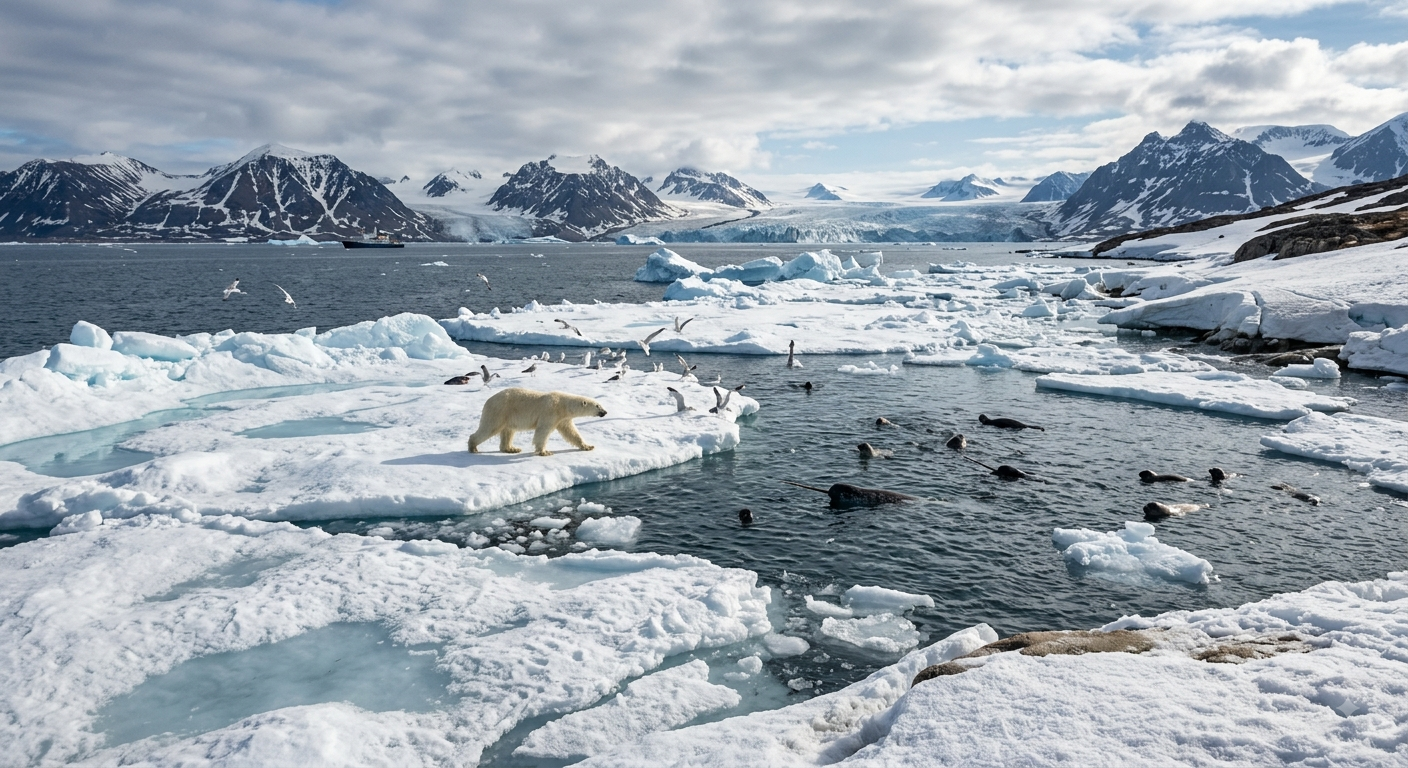
The Arctic environment includes vast areas of tundra, where short grasses, mosses, lichens, and small shrubs survive in a short growing season. There are also glaciers and ice caps, while the Arctic Ocean contains floating sea ice that expands and contracts according to the season.
Sea ice is particularly important to the Arctic ecosystem. It provides habitat and hunting platforms for several animals and affects the exchange of heat between the ocean and atmosphere.
Extreme Temperatures
The Arctic climate varies considerably from one location to another. Coastal areas may experience somewhat milder conditions because of the influence of the ocean, while inland regions can become extremely cold during winter.
Summer does not necessarily mean warm weather. Even when temperatures rise, much of the environment remains cool compared with temperate regions. The short growing season places strong limits on plants and animals.
Wildlife and Ecology
Despite its harsh conditions, the Arctic supports a fascinating collection of species. Arctic wildlife has developed specialized physical and behavioral adaptations that help animals conserve energy, find food, and survive long winters.
Polar Bears and Arctic Foxes
Polar bears are among the best-known Arctic animals. They depend heavily on sea ice for hunting seals and traveling across their environment. Their thick fur and layer of body fat provide insulation against cold conditions.
Arctic foxes have another remarkable adaptation: their coats change with the seasons. Their winter fur provides both insulation and camouflage against snowy surroundings, while their summer coat is darker and better suited to the changing landscape.
Reindeer and Caribou
Reindeer, known as caribou in North America, are important herbivores of the Arctic and sub-Arctic. Large herds can travel considerable distances in search of food.
Their wide hooves help them move across snow and soft ground, while their seasonal movements connect different parts of the Arctic ecosystem.
Seals, Whales, and Birds
Seals are closely connected with Arctic sea ice and marine food chains. Several whale species also visit or live in Arctic waters, including bowhead whales, narwhals, belugas, and gray whales in different areas.
The region also becomes an important seasonal destination for migratory birds. During the short Arctic summer, millions of birds can arrive to feed and breed, taking advantage of abundant insects, plants, and marine food.
Surviving the Extreme Environment
Arctic species use many strategies to survive. Thick fur, feathers, body fat, seasonal migration, changes in metabolism, and specialized feeding behavior all play a role.
The ecosystem is interconnected, meaning that a change affecting sea ice or vegetation can eventually influence predators, prey, birds, and marine species.
People and Life in the Arctic
The Arctic is not an empty wilderness. It is home to numerous Indigenous peoples and other communities whose lives are closely connected to the environment.
Indigenous Communities and Traditional Lifestyles
Indigenous communities across the Arctic have developed detailed knowledge of local landscapes, seasons, animals, weather, and natural resources. Traditional activities in different regions have included fishing, hunting, herding, gathering, and travel across frozen landscapes.
These practices vary considerably among communities, and modern Arctic life combines traditional knowledge with contemporary education, technology, transportation, healthcare, and employment.
Modern Challenges
Arctic communities face unique challenges. Remote locations can make transportation and infrastructure expensive, while changing weather and environmental conditions can affect traditional activities.
Climate change can also alter travel routes, wildlife patterns, coastal conditions, and access to familiar places. For many Arctic residents, environmental change is therefore not an abstract scientific issue—it can directly affect everyday life and cultural traditions.
Climate Change in the Arctic
The Arctic has become one of the most closely studied regions in the world because its environment is changing rapidly.
Melting Sea Ice and Rising Temperatures
Rising temperatures contribute to reductions in seasonal sea ice and changes in snow and permafrost conditions. Less sea ice can affect animals that depend on frozen surfaces, while warming can also influence ocean ecosystems and coastal environments.
Changes in permafrost are another concern. When frozen ground thaws, landscapes can become unstable, ecosystems can change, and carbon stored in frozen soils can enter natural cycles.
Why Arctic Changes Matter Globally
The Arctic does not exist in isolation. Ice and snow reflect sunlight back into space, helping regulate Earth’s energy balance. When reflective surfaces decline, darker ocean or land can absorb more solar energy.
Changes in the Arctic can also interact with ocean circulation, atmospheric patterns, ecosystems, and global sea-level processes. For these reasons, monitoring the polar region is important for understanding the wider climate system.
Northern Lights and Other Natural Wonders
The Arctic Circle is famous not only for its environmental importance but also for spectacular natural phenomena.
Aurora Borealis
The Northern Lights, or Aurora Borealis, appear when charged particles associated with solar activity interact with gases in Earth’s upper atmosphere. The resulting displays can produce waves and curtains of light across the night sky.
Clear, dark skies and low light pollution make many Arctic destinations popular locations for viewing the aurora.
Midnight Sun and Arctic Landscapes
The midnight sun offers an equally unusual experience. In summer, visitors can sometimes explore landscapes under sunlight late into the night.
Snow-covered mountains, fjords, glaciers, tundra, frozen lakes, and coastal scenery add to the region’s visual appeal. Each season provides a different perspective on the Arctic environment.
Visiting the Arctic Circle
Arctic travel has grown in popularity, with destinations in northern Scandinavia, Iceland, Greenland, Canada, Alaska, and other northern regions offering different experiences.
Popular activities include:
- Wildlife watching for bears, whales, seals, reindeer, and birds.
- Dog sledding across snowy landscapes.
- Snow activities such as cross-country skiing and snowshoeing.
- Northern Lights tours during the darker months.
- Summer excursions under the midnight sun.
- Cultural experiences that introduce visitors to local traditions and Arctic history.
Travel conditions can change quickly, so visitors should prepare for cold weather, limited daylight or continuous daylight depending on the season, and remote environments. Responsible travelers should also follow local guidance and avoid disturbing wildlife or fragile vegetation.
Conservation and the Future
Protecting the Arctic ecosystem requires cooperation among scientists, governments, Indigenous communities, conservation organizations, businesses, and travelers.
Wildlife conservation programs can help protect vulnerable species and important habitats. Scientific research provides valuable information about sea ice, oceans, wildlife populations, permafrost, and atmospheric conditions.
Sustainable Arctic Travel
Tourism can bring economic opportunities to northern communities, but it should be managed carefully. Sustainable Arctic travel means respecting local cultures, minimizing waste, reducing disturbance to wildlife, and choosing responsible operators whenever possible.
The future of the Arctic will depend partly on how effectively societies respond to global climate change. Protecting habitats and reducing environmental pressures cannot stop every natural change, but thoughtful action can improve the resilience of Arctic ecosystems and communities.
Conclusion
The Arctic Circle is a region where geography, climate, wildlife, culture, and science meet in extraordinary ways. Its frozen seas and tundra support specialized ecosystems, while Indigenous communities maintain deep connections with the land and water.
At the same time, the Arctic is undergoing significant environmental change. Melting sea ice, warming temperatures, and shifting ecosystems make the region an important indicator of wider changes on Earth.
For scientists, the Arctic provides essential clues about our planet’s climate. For wildlife, it is a complex and fragile habitat. For communities, it is home. And for travelers, it offers unforgettable experiences such as the Northern Lights, midnight sun, wildlife encounters, and vast polar landscapes.
Understanding and protecting the Arctic Circle is therefore not only about preserving a distant frozen world. It is about better understanding the interconnected planet we all share.
✍️ Written by Vimal Bhagat
🌎 Sharing fresh news, trending stories & interesting updates from around the world.
💙 Read more: https://arcticcircle.us
